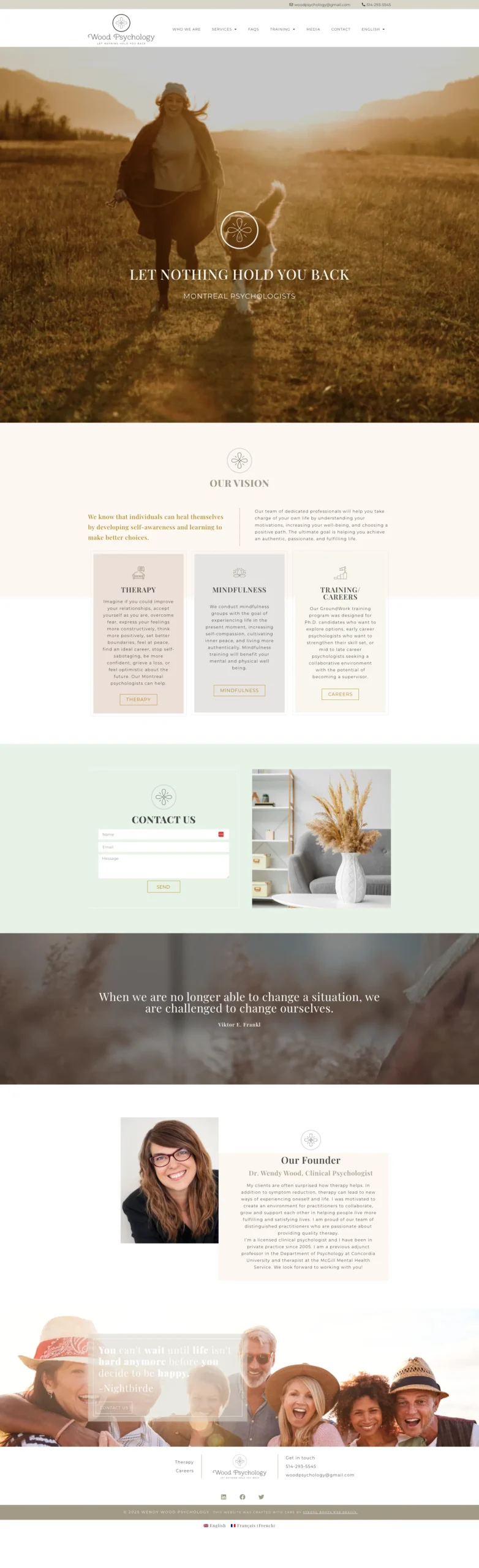
Web Design for Psychologists
The complexities of the inner workings of the human mind can make the job of being a psychologist extremely challenging and, at times, stressful – but web design for psychologists does not have to be.
Many extremely intelligent and highly educated people believe that obtaining a website for his or her personal business is a labor intensive, and inherently overwhelming process. Especially mental health professionals, who dedicate so much of their emotional and mental energy to helping others, see making decisions about their website as a roadblock. Many believe that this barrier is one they cannot move past; but this is simply not the case.
The necessity for mental health support is growing exponentially. At the same time, the stigma that surrounds seeking out mental health services persists, and many people who could greatly benefit from the services of a professional counselor are afraid to ask for the help they need.
Keep in mind that mental health is still heavily stigmatized, and people are not comfortable with discussing those things openly. As a result, many mental health conditions go undiagnosed and untreated.
According to the National Institute of Mental Health, there were twice as many suicides as there were homicides in the United States in 2017. That is frightening, alarming, and should surely be a cause for concern.
Having an easily accessible and well-designed therapist website gives potential clients a way to learn about your services and about how you can help them directly from you. Psychologists and other mental health professionals can help break down the barriers to receiving mental health support by making sure that they have an accessible and informative website.
As a psychologist, you are in this business to reach out and help as many people as possible, and building a webpage is an excellent strategy, whether you are just starting to grow your business, or whether you have been providing services for some time already.
Web Design for Psychologists: Necessary Change in Approach and Point of View
As a psychologist, you may naturally tend to focus less on the business side of your practice, because you are not in it for the money. Maintaining a business ranks very low on the totem pole of responsibilities. The business aspect and the prospect of having extra money are certainly in your mind, but the patients come first.
You would love to invest more time into dabbling in business, but you are not comfortable with the idea of marketing your own mental health services. This is extremely common, and completely understandable. Additionally, your goal is to help your clients, not compete with other mental health professionals.
As a psychologist, you inherently care deeply about the mental health of others and want to lessen the burden those patients carry in their daily lives. You’re not a salesman or saleswoman.
But it is important to change your perspective. Taking steps to grow your practice, such as establishing a website for your private practice, is not something that you shouldn’t have to feel conflicted about creating a website. Rather, by giving people more ways to learn about what you do, you are making yourself an accessible resource to people in need.
As a psychologist and healer of people, it is time to see and approach things from a different point of view. When focusing on the business side of your practice, keep in mind that you are reaching out and engaging those who are actively seeking those services.
How exactly is this done? How can web design for psychologists reflect and support the values that you care about, while simultaneously helping to grow your practice? Here are some things to consider.
Make Your Goals Clear
Most people who invest all the time and effort into becoming psychologists have a compelling and powerful reason for doing so. Share this with your website visitors. Talking about what drew you to this profession and what motivates you to keep going when things are challenging can be a powerful thing to share, and can help potential clients feel an immediate trust and connection with you.
Tell a Story
An awesome way to garner a solid and trusting relationship with an individual, especially as a psychologist, is to be very knowledgeable about the field. There is no better way to do this than by sharing stories about the work you have done. Preserving client confidentiality can be done by changing details and (of course) not sharing names or any personal and identifiable information.
Through your webpage, share a story about a treatment experience and the follow-up of a patient to show that you deeply care about maintaining strong connections with patients.
Create a Webpage that is Useable
Obviously, make a well-functioning webpage with a solid host, but on the not-so-obvious side, make it easy to navigate and readable. If your webpage does not possess the aforementioned qualities, it is not going to be very useful to potential patients.
Think about how annoying it is to click around a webpage and not be able to access the things you might really need to know. This is even more true for potential visitors for your site, who may be in distress. Their threshold for frustration is likely to be low, and it is vital that you make the information that they need clear and easy to find.
If the technicalities are good to go, then make sure your brand is clearly defined. Make sure you know what type of impact you can have on your patients, and that you communicate this to them in a way that inspires hope.
If you’re not entirely tech-savvy, hire a professional. As people who design websites for businesses professionally, they can surely make your website a success. Choosing someone who knows your particular field well, and has experience working with mental health professionals and web design for psychologists, is a wise choice.
Make sure that your website is unique and makes people feel better after visiting it. You’re already a great psychologist, just make sure the rest of the world knows that too.
Did you like this post? Share it!
Related Reads for Starting and Branding Your Practice:
- Branding And Therapist Logo – Use Your Therapist Logo Consistently
- Branding Your Mental Health Private Practice
- Professional Website Fonts: Choose the Right Typography for Your Therapy Website
- Counseling Practice Names for Branding and Website
- Photos for Your Therapy Website | Counseling Stock Photos
- Logo Designer – Looking for a Professional Designer
- Benefits of a Logo for your Therapist Branding
- Therapist Logo Design – Define Your Brand Identity
- Therapist Logo Examples – Inspiration for Therapist Logos
- Therapist Logo Ideas – Find Inspiration in the World Around You!
- Different Logo Types for Therapist Business Branding
- Your Therapist Logo: The Ultimate Guide – Therapist Website Design
- Tools for Small Businesses: Low-cost Social Media Tools For Your Biz
- User-Friendly Website Templates For Therapists
- Web design for Counselors – Private Practice Websites
- Web Design for Psychologists: A simple guide – Therapist Website Design
- Website For Forensic Psychology Practice –4 Factors to Consider When Choosing the Best Mental Health Website Design
- 4 Ways to Identify Web Design Goals for Your Therapy Website
- How to Choose Your Therapy Niche and Get More Clients
- I Want a Website for My Business: A Beginner’s Guide to Getting Started
- Affordable Web Designers for Therapists: Expert Solutions Guide
- Affordable Website Development for Counseling Professionals
- Tips on Website design for Mental Health Professionals
Need any of the following?
- Web Design And SEO Services
- Done-For-You Therapist Website Template
- Professional and Customised Web Design
Here are some Sample Websites We’ve Created:
Check out our Portfolio for more!
Hi! I’m Sarah.
I help counselors and therapists have a bigger impact on the world through better client connection. I do this by creating beautiful visuals and strategically designed websites.