
If you’re creating a therapy website, one of the first decisions you’ll face is choosing a website platform.
For many therapists, that decision quickly narrows down to two options:
- Squarespace
- WordPress
And if you’ve spent any time researching online, you’ve probably discovered that people have strong opinions about both.
Some people insist that Squarespace is the easiest option.
Others claim WordPress is the only serious choice.
The reality is a little more nuanced.
Neither platform is perfect.
Neither platform is wrong.
And the best choice depends on your goals, your comfort level with technology, and how you see your practice growing over time.
This guide will walk through the strengths, limitations, and practical considerations of both platforms so you can make a decision that feels aligned with your needs today—and your goals for the future.
The Short Answer
If a therapist asked me for a quick recommendation, my answer would usually be:
For most therapists, I recommend WordPress with a visual builder.
Not because Squarespace is bad.
And not because WordPress is perfect.
But because modern WordPress websites can be nearly as easy to use while offering significantly more flexibility, customization, and long-term growth potential.
That said, there are situations where Squarespace makes a lot of sense.
If you’re already comfortable using Squarespace, you enjoy the platform, or you’ve found a template you absolutely love, Squarespace can be a perfectly reasonable choice.
The goal isn’t to choose the “best” platform.
The goal is to choose the platform that’s the best fit for your practice.
The Real Difference Between Squarespace and WordPress
Many comparison articles focus on features.
But I think the more important distinction is this:
Squarespace and WordPress are built around different philosophies.
Squarespace is built for simplicity.
WordPress is built for flexibility.
That’s the core difference.
Squarespace gives you a structured environment with guardrails that make it easier to get started.
WordPress gives you significantly more freedom, which means more flexibility and more room to grow.
One isn’t inherently better than the other.
The question is whether you value simplicity or flexibility more.
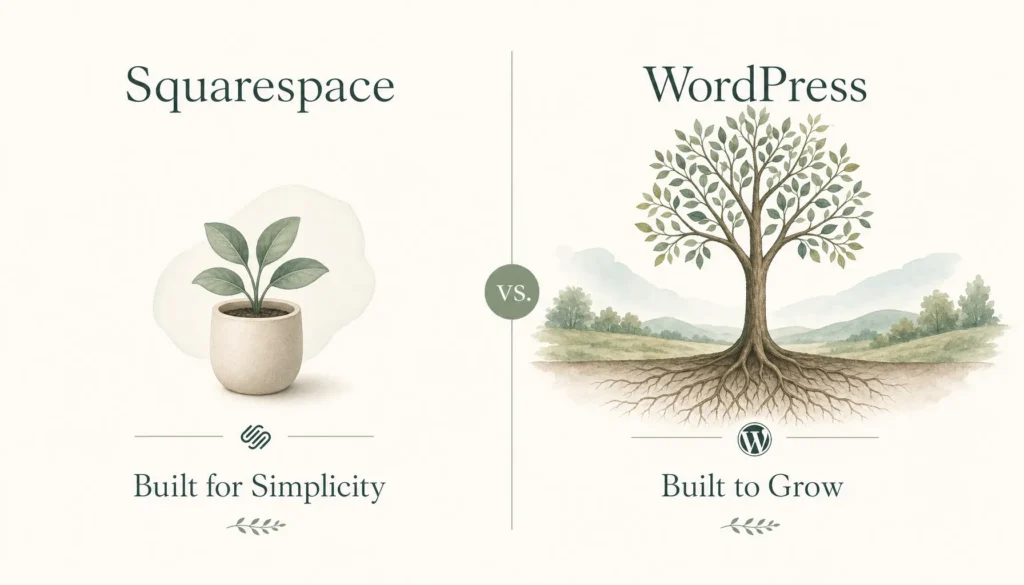
Built for Simplicity vs Built to Grow
Squarespace often feels like the easiest path to getting a website online.
You choose a template.
You add your content.
You customize a few settings.
And you can create something that looks quite professional relatively quickly.
For many therapists, that’s appealing.
WordPress takes a different approach.
Instead of prioritizing simplicity above everything else, it prioritizes flexibility.
That means there are more options.
More customization.
More ways to adapt the platform to your needs.
More room to evolve over time.
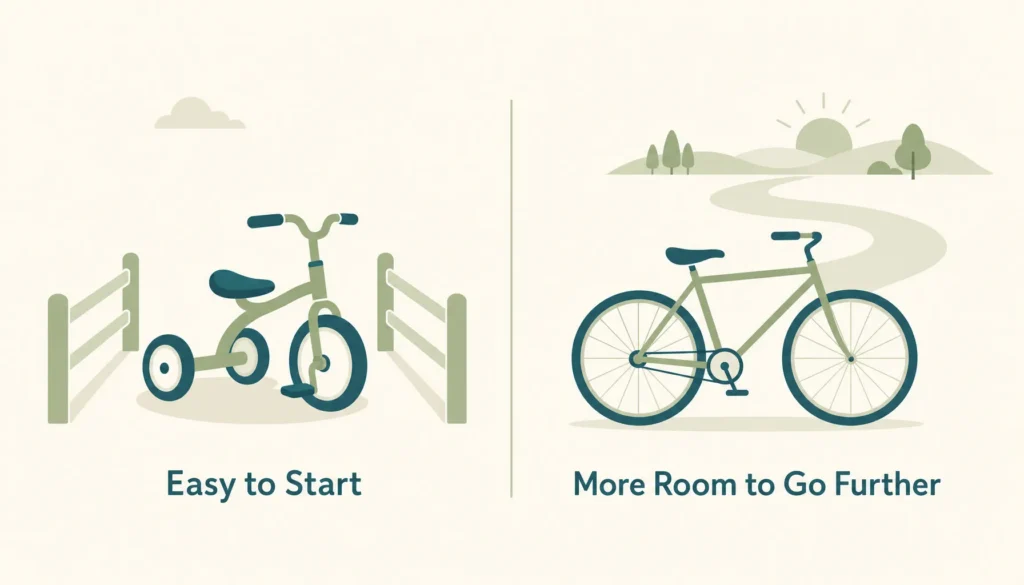
When I explain the difference to therapists, I often use this analogy:
Squarespace is a bit like a tricycle.
It’s easy to get started.
It’s stable.
It has built-in guardrails.
WordPress is more like a bicycle.
There may be a slightly steeper learning curve at first, but it gives you much more freedom, flexibility, and room to go where you want to go.
For therapists who plan to grow their practices over time, that flexibility can become incredibly valuable.
WordPress Isn’t What Many Therapists Think It Is
One of the biggest misconceptions I encounter is that therapists often imagine WordPress as highly technical.
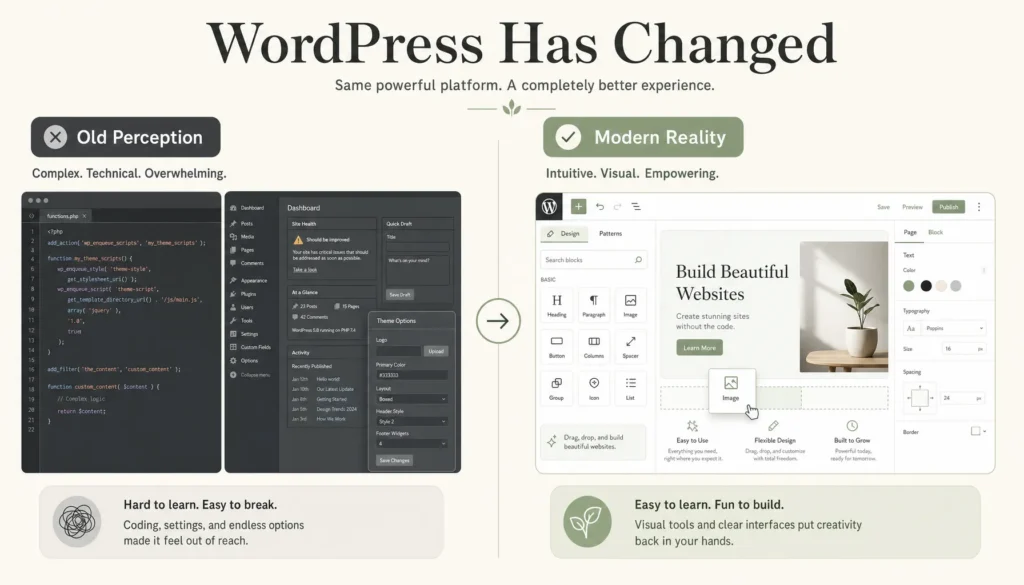
They picture:
- coding
- developers
- complicated dashboards
- endless technical problems
That image was more accurate fifteen years ago than it is today.
Modern WordPress websites often use visual builders that allow you to edit pages visually without touching code.
You can:
- drag and drop sections
- edit text directly on the page
- update images
- create new pages
- make changes visually
For many therapists, using a well-built WordPress website feels surprisingly approachable.
In fact, one of the reasons I often recommend WordPress is that therapists can get the flexibility of WordPress without sacrificing usability.
The experience is very different from what many people imagine.
When Therapists Start Hitting the Walls With Squarespace
One of the reasons Squarespace is so popular is that it does a good job helping people get started.
The challenge is that many therapists aren’t just building a website for today.
They’re building a website for the practice they’ll have three, five, or even ten years from now.
And that’s where limitations sometimes start to appear.

Design Flexibility
Many therapists begin with a Squarespace template and are perfectly happy.
But over time, they may start wanting something that feels more distinctive.
Something that better reflects:
- their personality
- their brand
- their therapeutic style
- their evolving practice
This is where some therapists begin feeling like they’re fighting the platform.
Squarespace websites often have a recognizable aesthetic.
And while customization is certainly possible, there are limits.
WordPress generally offers far more freedom when it comes to creating a website that feels uniquely yours.
SEO Growth
This is one of the biggest reasons many therapists eventually move to WordPress.
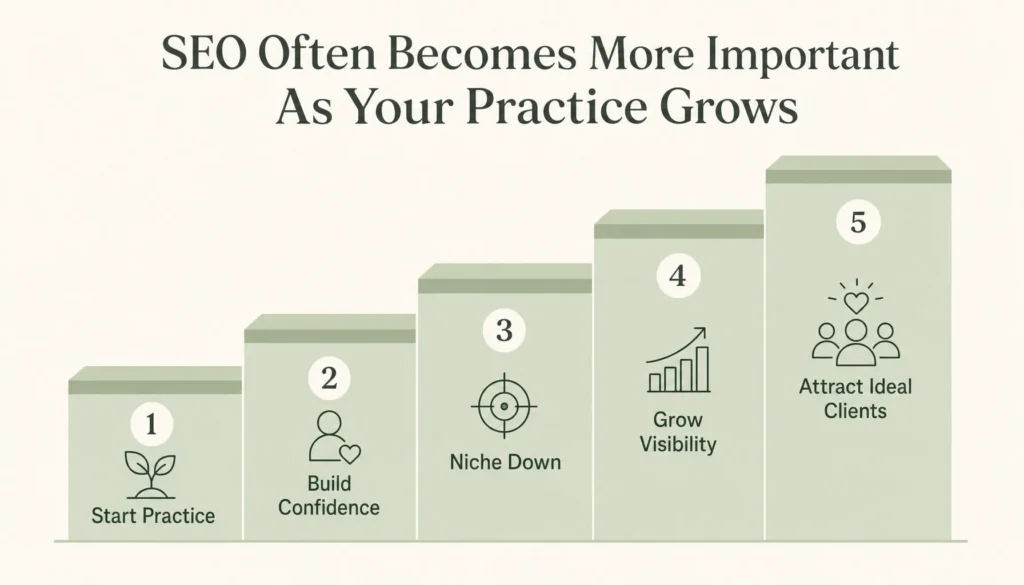
When you’re first starting private practice, SEO may not feel like a priority.
You’re focused on:
- getting your website launched
- finding your first clients
- building confidence
- learning how private practice works
But after a few years, things often change.
You may want to:
- transition to private pay
- attract more ideal-fit clients
- become known for a specialty
- grow your practice intentionally
- increase your visibility online
That’s where SEO often becomes much more important.
And WordPress provides access to a much larger ecosystem of SEO tools, resources, and optimization options.
More importantly, it gives you the flexibility to build a website that can support long-term SEO growth.
For therapists who see online visibility as an important part of their future, this can be a significant advantage.
Future Growth and Scalability
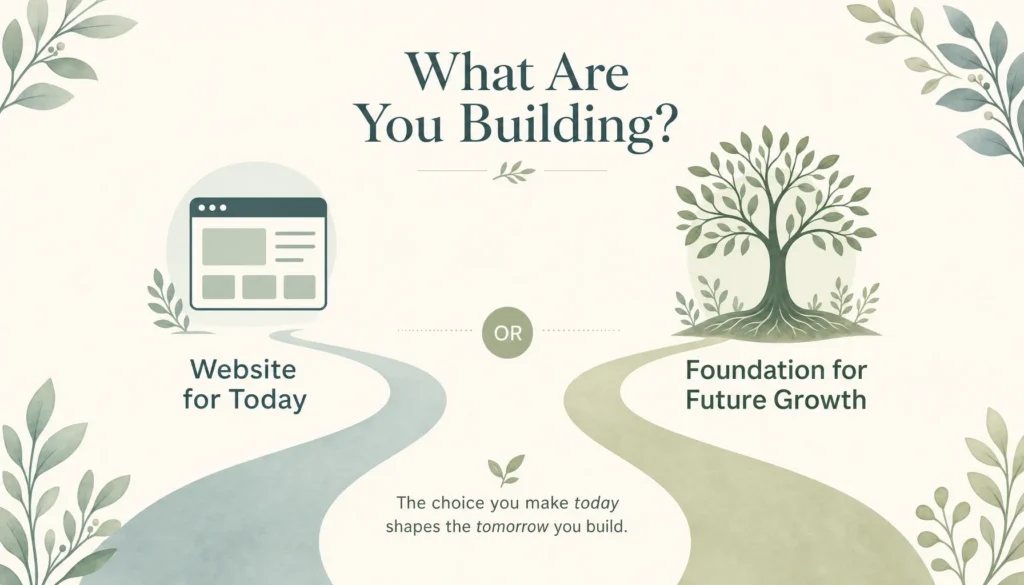
One of the questions I encourage therapists to ask themselves is:
“What do I want my website to be able to do three to five years from now?”
Not because you need everything figured out today.
But because your future goals can influence which platform makes the most sense.
Many therapists start with relatively simple websites.
A homepage.
An about page.
A few service pages.
A contact form.
That’s perfectly appropriate.
But over time, many practices evolve.
Many therapists start with relatively simple websites.
A homepage.
An about page.
A few service pages.
A contact form.
That’s perfectly appropriate.
But over time, many practices evolve.
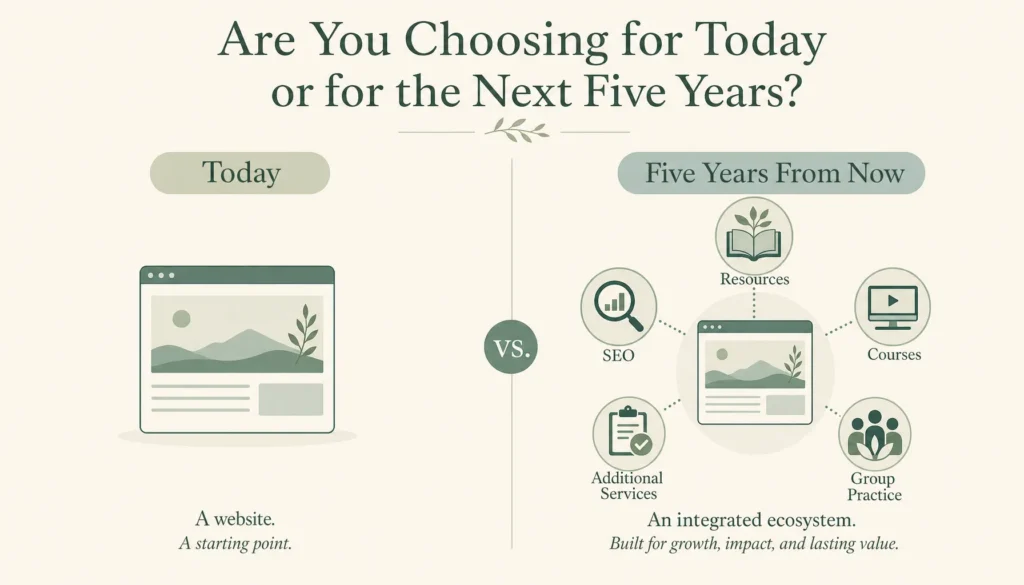
You may decide to:
- create educational resources
- start blogging consistently
- improve SEO
- offer workshops
- create online courses
- build a resource library
- add new services
- hire additional clinicians
- grow into a group practice
None of those things are required.
But if they do become part of your future plans, WordPress generally provides more flexibility to support that growth.
This doesn’t mean every therapist should choose WordPress simply because they might need those features someday.
But it is worth considering whether you’re building a website for your current practice or for the practice you hope to have in the future.
A Website Should Grow With You
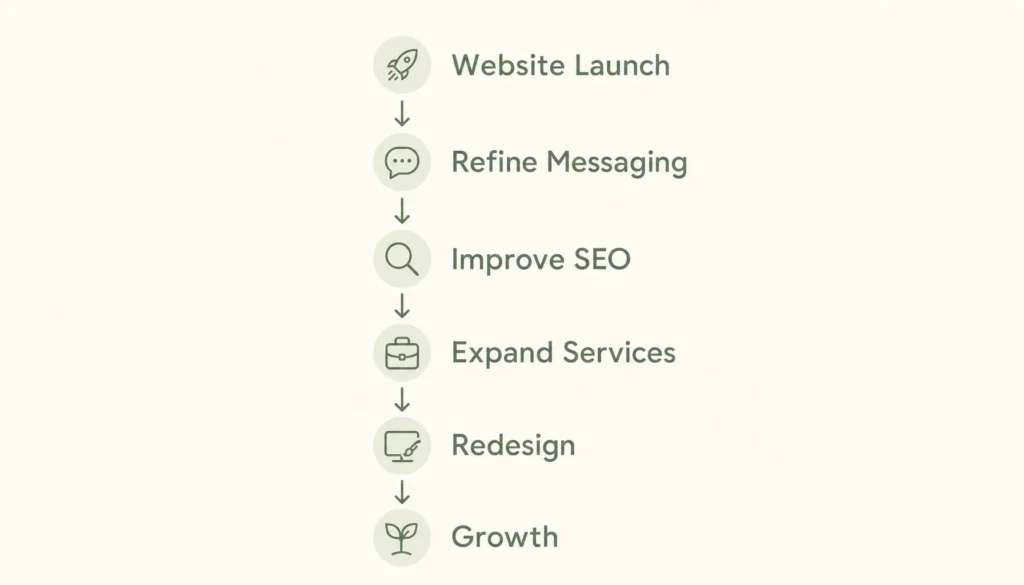
One of the themes you’ll see throughout the ROOTS Learning Center is that your website isn’t a finished product.
It’s a living part of your practice.
Just as your clinical work evolves over time, your website will likely evolve too.
You may:
- refine your niche
- update your messaging
- improve your SEO
- expand your services
- redesign your site
- change your visual identity
A good website platform should make those changes possible.
The question isn’t:
Which platform is perfect?
The question is:
Which platform gives me the right balance of simplicity and flexibility for where I am right now?
When Squarespace Is a Great Choice
It’s important to say this clearly:
Squarespace can absolutely be the right choice for some therapists.
Sometimes conversations about website platforms become unnecessarily polarized.
The reality is that many therapists have successful websites built on Squarespace.
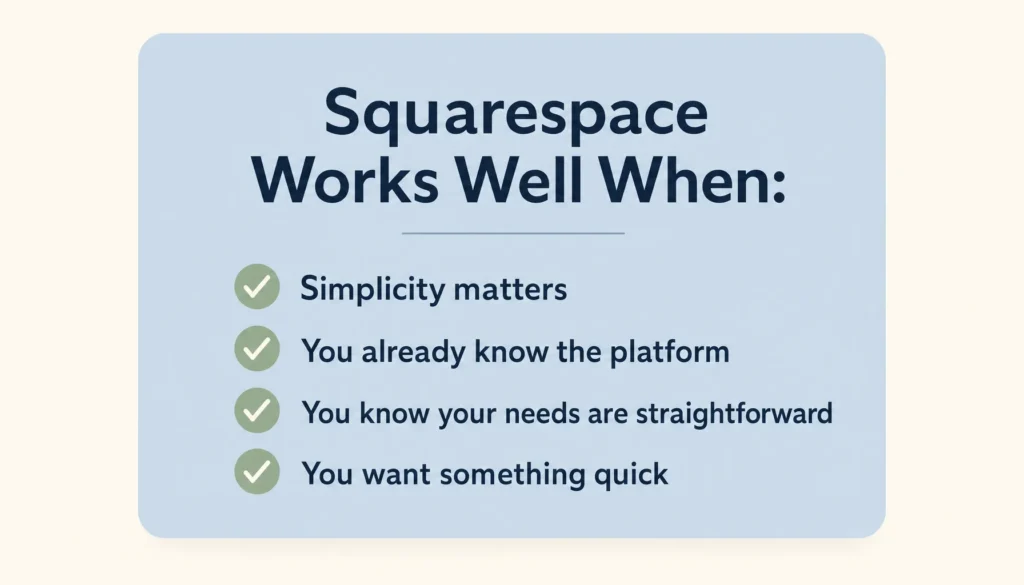
Squarespace may be a great fit if:
- you already know how to use it
- you enjoy the platform
- you have relatively simple needs
- you want something straightforward
- you don’t anticipate needing significant customization
- you have found a template you genuinely love
There is no prize for choosing the more complicated option.
The goal is to choose the option that best supports your practice.
For some therapists, that may very well be Squarespace.
When WordPress Is Usually the Better Choice
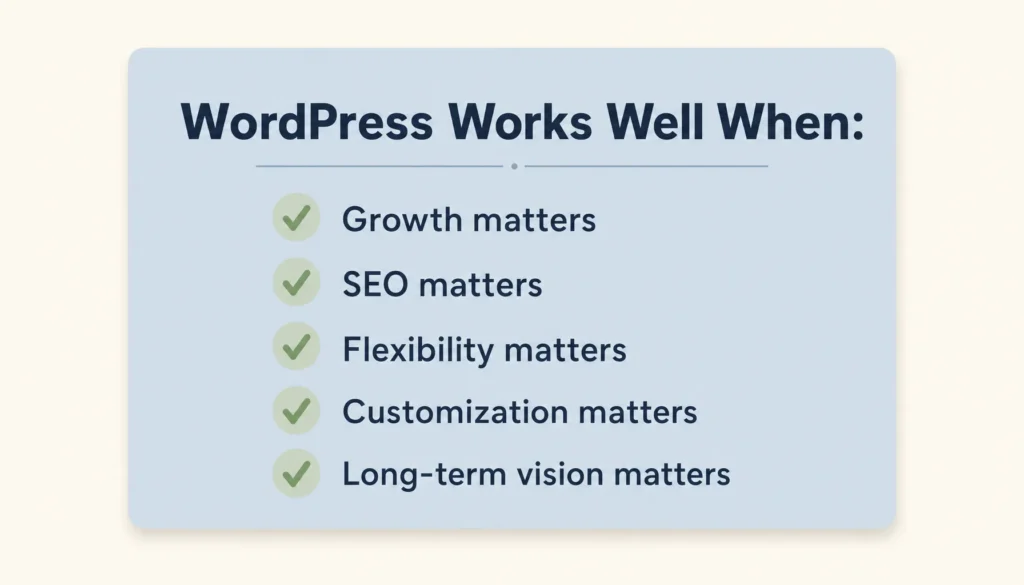
WordPress is often the stronger option when:
- long-term growth matters
- SEO is important to you
- customization matters
- flexibility matters
- you want more control over your website
- you may eventually expand your services
- you want a platform that can evolve alongside your practice
For many therapists, these factors become increasingly important over time.
Which is why WordPress is often the platform I recommend.
Not because it’s inherently superior.
But because it tends to create fewer limitations later.
Questions to Ask Yourself Before Choosing a Platform
If you’re feeling stuck between Squarespace and WordPress, try asking yourself these questions.
How Important Is Long-Term Flexibility?
Are you building a simple website that you expect to remain fairly static?
Or are you creating a foundation that may evolve significantly over time?
How Important Is SEO to Your Future Goals?
If attracting clients through search engines is likely to become an important part of your growth strategy, WordPress may offer advantages worth considering.
Do You Enjoy Learning Website Tools?
Some people genuinely enjoy exploring website platforms.
Others find the entire experience frustrating.
Neither answer is wrong.
Your relationship with technology matters.
Are You Choosing for Today or for the Next Five Years?
This may be the most important question.
Sometimes the easiest choice today creates limitations tomorrow.
Other times simplicity is exactly what you need.
Neither approach is wrong.
The goal is simply to make a conscious decision.
Common Myths About Squarespace and WordPress
Myth: WordPress Is Only for Developers
This is one of the most common misconceptions.
Modern WordPress websites can be surprisingly user-friendly, especially when paired with a visual builder.
Many therapists use WordPress successfully without touching code.
Myth: Squarespace Is Bad
Squarespace is not bad.
It solves a real problem.
It helps people create websites relatively quickly and easily.
The question isn’t whether Squarespace is bad.
The question is whether it’s the best fit for your goals.
Myth: You Have to Get the Platform Decision Perfect
Many therapists feel enormous pressure to choose the “right” platform.
But websites can evolve.
Platforms can be changed.
Sites can be rebuilt.
Nothing is permanently locked in forever.
That doesn’t mean platform choice doesn’t matter.
It does.
But it also doesn’t need to become a source of paralysis.
Frequently Asked Questions
Is WordPress Harder to Use Than Squarespace?
Historically, yes.
Today, the difference is often much smaller than many people expect, especially when WordPress is paired with a visual builder.
Is Squarespace Good for SEO?
Squarespace can absolutely support SEO.
However, WordPress generally provides more SEO flexibility and access to a larger ecosystem of optimization tools.
Can I Move From Squarespace to WordPress Later?
Yes.
Many therapists eventually migrate from Squarespace to WordPress as their practices grow.
While the process takes some work, it is absolutely possible.
Which Platform Is Better for Private Pay Therapists?
The answer depends on your goals.
If long-term visibility and SEO are important parts of your strategy, WordPress often provides more flexibility.
Which Platform Is Better for Blogging?
Both platforms support blogging.
However, WordPress generally offers more flexibility and more tools for content creation and SEO.
Which Platform Is Better for Group Practices?
In many cases, WordPress becomes the stronger option as complexity increases.
Larger websites often benefit from the flexibility and scalability WordPress provides.
My Recommendation
If you’re looking for the shortest possible answer:
For most therapists, I recommend WordPress with a visual builder.
It provides a strong balance of:
- usability
- flexibility
- customization
- SEO potential
- long-term growth
That doesn’t mean Squarespace is wrong.
In many situations, Squarespace is a perfectly reasonable choice.
But if you’re building a website that you hope will grow alongside your practice, WordPress often provides a stronger long-term foundation.
Next Steps
Choosing a website platform is only one piece of building your online presence.
If you’re still working through the basics, these guides can help:
- How to Start a Therapy Website
- What Is Website Hosting? A Beginner’s Guide for Therapists
- What Pages Every Therapist Website Needs
- DIY vs Hiring a Therapist Website Designer
- How Therapists Get Found Online
Not Sure Which Platform Is Right for Your Practice?
Choosing a website platform doesn’t have to be a guessing game.
At Strong Roots Web Design, we help therapists create websites that fit both where they are today and where they want their practices to go in the future.
Whether you’re starting from scratch or trying to decide which platform makes the most sense, we’re happy to help you think through the options.