
A Beginner’s Guide for Private Practice Therapists
Starting a therapy website can feel surprisingly overwhelming.
Suddenly, you’re trying to understand domains, hosting, SEO, website platforms, copywriting, branding, and whether or not you’re supposed to have your entire niche figured out before you even begin.
For many therapists, it can feel like learning an entirely new language.
The good news is that starting a therapy website does not require having everything perfectly figured out before you begin.
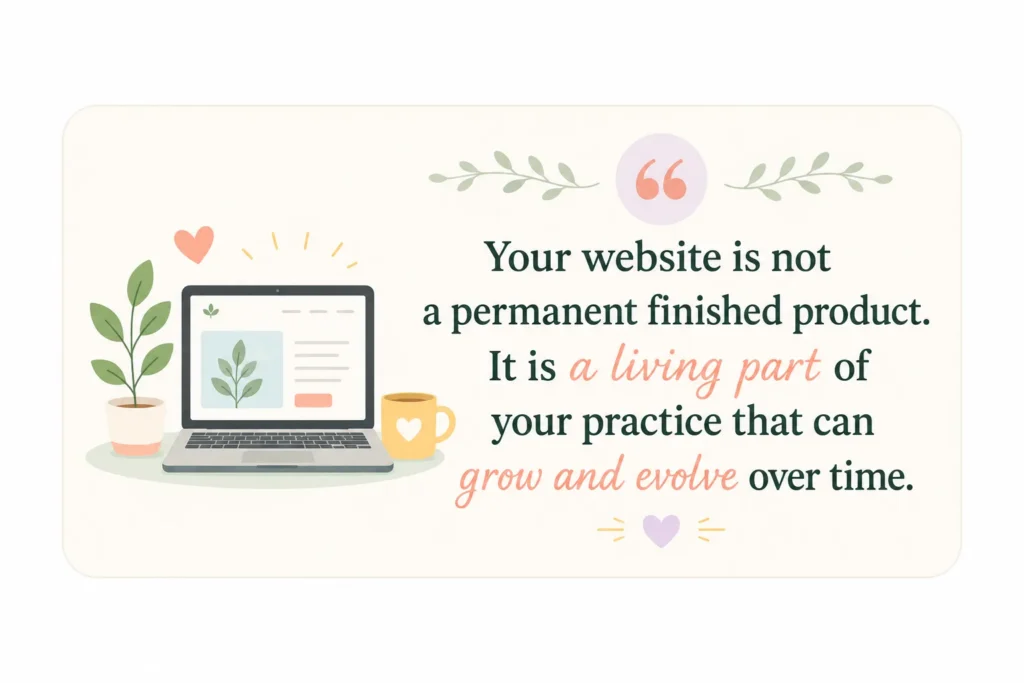
Your website is not a permanent finished product.
It is a living part of your practice — something that can grow, evolve, and become more refined over time.
You do not need the perfect niche.
You do not need perfect branding.
You do not need a massive website.
What you do need is a clear, trustworthy, functional foundation that helps potential clients understand who you are, how you help, and how to take the next step.
This guide will walk you through the process step by step in a beginner-friendly way.
What You Actually Need to Start a Therapy Website
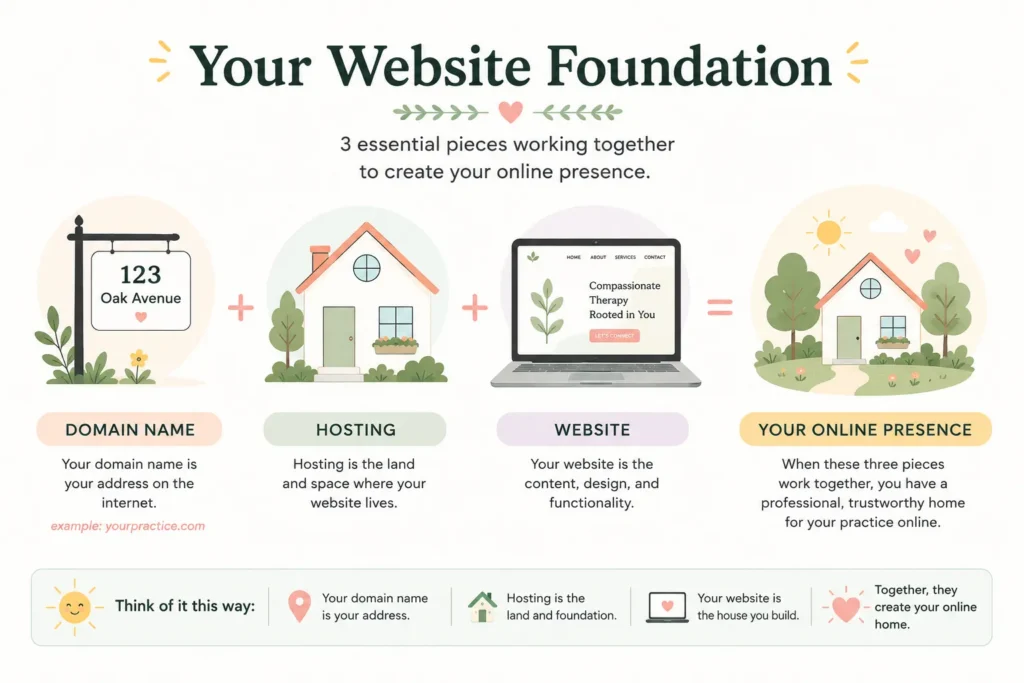
At the most basic level, a therapy website needs three things:
- A domain name
- Website hosting
- The actual website itself
If those terms feel unfamiliar, don’t worry.
We’ll walk through each one.
Domain Name
Your domain name is your website’s address online.
For example:
- yourpractice.com
- drjanesmiththerapy.com
- seattleanxietytherapy.com
This is what people type into their browser to find your website.
Website Hosting
Website hosting is the place where your website “lives” online.
If your domain name is your address, hosting is the actual building or land where the website exists.
Hosting stores your website files and makes them accessible to visitors.
The Website Itself
This includes:
- your pages
- design
- copy
- images
- contact forms
- navigation
- functionality
This is the actual experience people interact with when they visit your site.
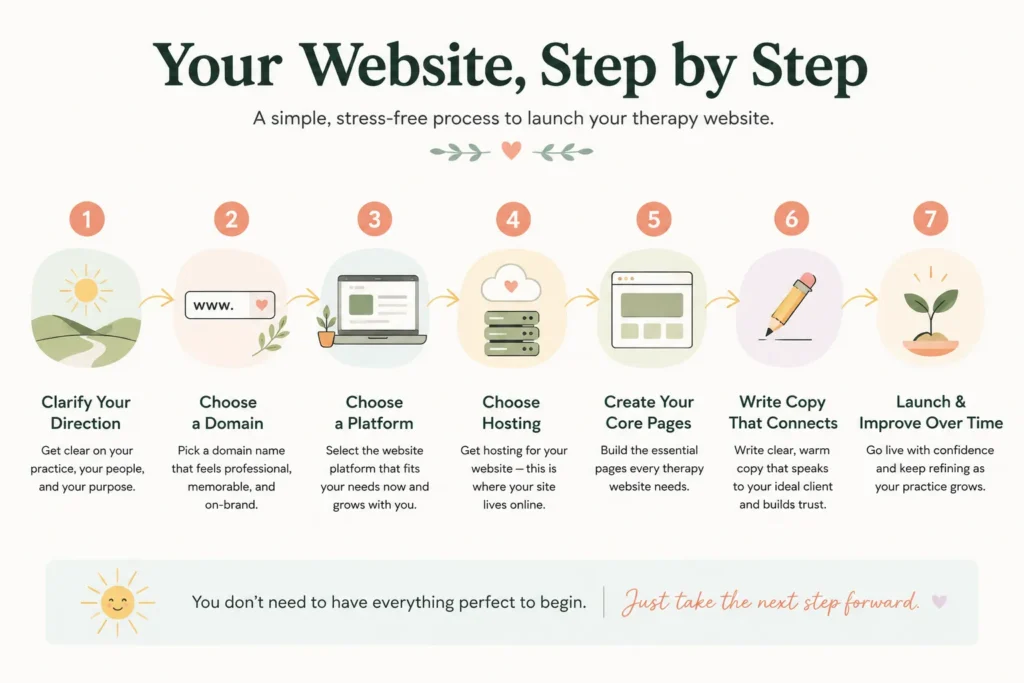
Step 1: Clarify the Purpose of Your Website
Before choosing colors, fonts, or platforms, it helps to step back and think about what your website is actually meant to do.
For most therapists, a website should help potential clients:
- understand who you help
- understand what services you offer
- feel a sense of trust and connection
- learn how to contact you
- take the next step toward working with you
A therapy website does not need to say everything about you.
It simply needs to help the right people feel:
“This therapist might understand what I’m going through.”
You Do Not Need a Perfect Niche Before You Start
One of the biggest things that holds therapists back from creating a website is the pressure to have their niche completely figured out.
And while having a niche can absolutely strengthen your website and marketing over time, many therapists do not have total clarity when they first start private practice.
That’s okay.
Your website can evolve as your practice evolves.
Many therapists:
- refine their specialties over time
- discover which clients they most enjoy working with through experience
- transition toward private pay later
- narrow their focus gradually
- update their messaging as they grow
Your website is not like publishing a book that can never be changed.
It is a living document.
You can start with a thoughtful, professional foundation now and refine things over time as your practice becomes clearer.
In most cases, it is far better to launch a good website and improve it gradually than to stay stuck waiting for the perfect version.
Step 2: Choose a Domain Name
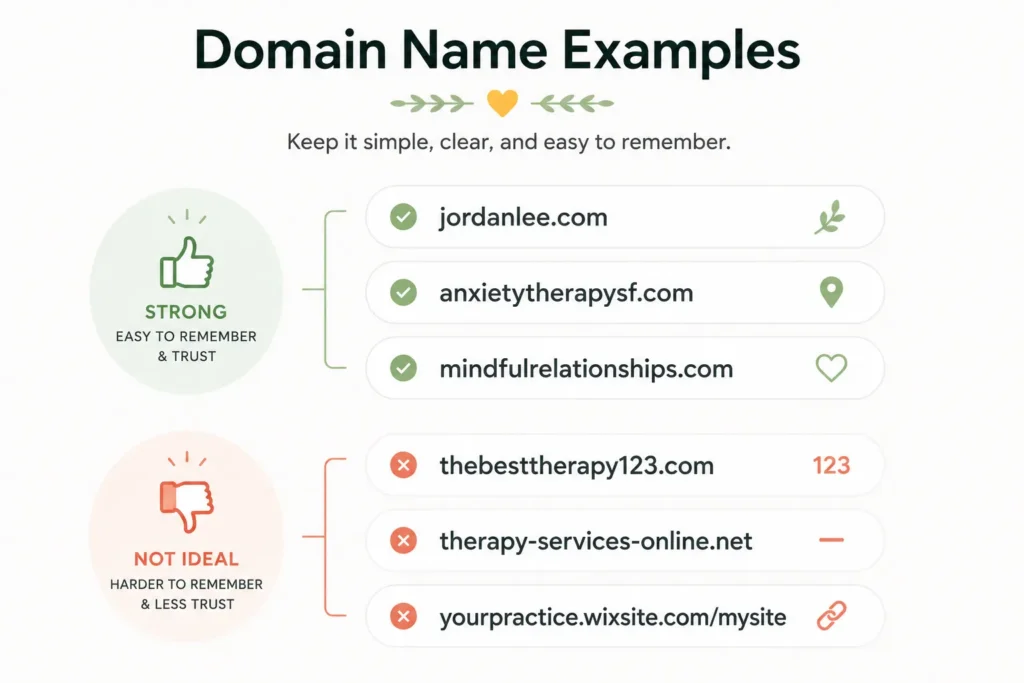
Your domain name is your website’s address online.
Examples:
- yourpractice.com
- drjanesmiththerapy.com
- chicagotraumatherapy.com
A good domain name should be:
- easy to spell
- easy to remember
- easy to say out loud
- professional
- flexible enough to grow with your practice
Should You Use Your Name or a Practice Name?
There’s no single right answer.
Some therapists prefer to use their own name, especially if they are building a solo practice around their personal reputation.
Others prefer to create a practice name that feels broader or more brand-oriented.
Both approaches can work well. If you’re still deciding, our list of 120 therapy practice name ideas can help you get started.
The important thing is choosing something that:
- feels aligned with your practice
- is easy for clients to remember
- gives you enough flexibility for future growth
Try Not to Box Yourself In Too Early
Some therapists accidentally choose domain names that become limiting later.
For example:
- focusing too narrowly on one modality
- choosing a location they may eventually leave
- building the entire brand around one very specific service
If you are completely certain about your long-term niche, that may not be an issue.
But if you’re still growing into clarity, it’s usually wise to leave yourself some room to evolve.
Step 3: Choose a Website Platform
One of the biggest decisions you’ll make is choosing the platform your website will be built on.
Most therapists end up comparing:
- Squarespace
- Wix
- WordPress
And this is often where things start feeling confusing.
The Difference Between Beginner-Friendly and Long-Term Flexible
Platforms like Squarespace and Wix are designed to feel approachable.
That accessibility can absolutely be helpful.
Many therapists can log in, choose a template, and create something visually decent fairly quickly.
But there’s an important tradeoff.
A helpful metaphor is that platforms like Squarespace and Wix can feel a bit like riding a tricycle.
They come with a lot of guardrails that make it harder to break things.
That can feel reassuring at the beginning.
But those same guardrails can also become limiting later as your practice grows.
Therapists often start running into problems like:
- limited customization
- SEO limitations
- restricted functionality
- difficulty expanding the site
- limitations around design flexibility
- trouble integrating more advanced features later
WordPress tends to work differently.
It’s more flexible and expandable.
That flexibility can feel a little more intimidating at first, but it also creates a much stronger long-term foundation.
As your practice evolves, a WordPress website can evolve with you.
You can:
- redesign the site
- improve SEO
- add new service pages
- integrate courses or memberships
- add advanced functionality
- expand into a group practice
- publish resources or educational content
without needing to completely rebuild everything from scratch.
WordPress Does Not Have to Feel Overwhelming
Many therapists assume WordPress automatically means coding or highly technical development.
That is no longer true.
Modern visual builders and tools make WordPress far more approachable than it used to be.
You can absolutely build a simpler, more beginner-friendly WordPress site while still creating a foundation that has room to grow.
Which Platform Is Right for You?
Squarespace or Wix may be a good fit if:
- you want something very simple
- you are comfortable with some limitations
- you are building a relatively straightforward website
- you want a very guided experience
WordPress may be a stronger fit if:
- you care about long-term flexibility
- SEO is important to you
- you want room for future growth
- you may expand your services later
- you want stronger customization options
- you want your website to evolve alongside your practice
Step 4: Choose Website Hosting
Website hosting is the service that stores your website files and makes your site available online.
Many therapists feel intimidated by hosting because it sounds technical.
But most therapists do not need to understand server infrastructure in detail.
What matters most is choosing hosting that is:
- reliable
- secure
- reasonably fast
- compatible with your platform
- supported if problems arise
What Therapists Should Actually Care About
When evaluating hosting, focus on practical things like:
Security
Your site should include an SSL certificate so visitors see a secure connection instead of browser warnings.
Reliability
Your website should stay online consistently.
Mobile Performance
Many therapy clients search for therapists on their phones.
Your website needs to load and function well on mobile devices.
Backups
Good hosting should include backups so your website can be restored if something goes wrong.
Support
If problems happen, having reliable support matters.
Hosting Is Meant to Support Your Website — Not Become Your Full-Time Job
Therapists do not need to become web infrastructure experts.
You simply need hosting that helps your website stay:
- secure
- functional
- accessible
- trustworthy
Step 5: Decide Whether to DIY or Hire Help
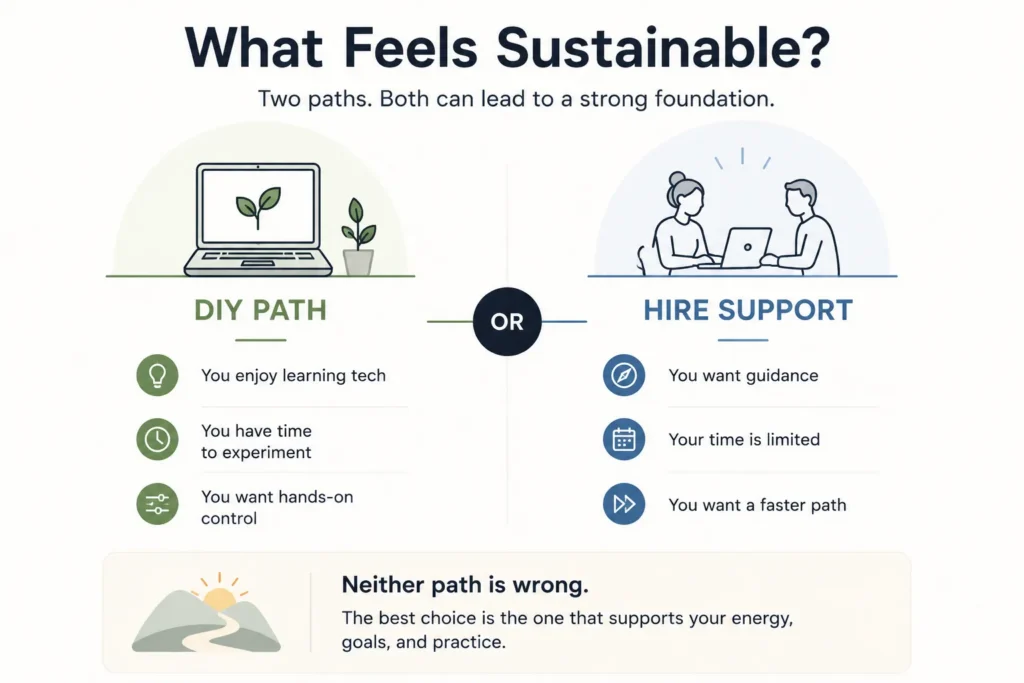
This is a completely separate decision from choosing your platform.
You can:
- DIY a WordPress website
- hire someone to build a Squarespace website
- DIY Squarespace
- hire someone to build a custom WordPress site
The real question is:
What approach best fits your skills, time, energy, and goals?
DIY Can Work Very Well for Some Therapists
There are therapists who genuinely enjoy building websites.
They like:
- experimenting
- learning new tools
- watching tutorials
- adjusting layouts
- figuring things out
If that process feels energizing rather than draining, DIY may absolutely be a good option.
Especially now that there are so many visual tools and tutorials available.
But DIY Is Not Automatically the Best Choice
Some therapists feel enormous pressure to DIY because it seems more affordable.
But if building a website:
- creates constant frustration
- drains your mental energy
- takes months longer than expected
- results in something that doesn’t feel professional
- prevents you from focusing on growing your practice
then it may not actually be the most effective use of your time.
Hiring help can make sense when:
- you want stronger strategy
- you want professional design support
- technology feels overwhelming
- your time is better spent elsewhere
- you want a more polished outcome
- you want SEO foundations built in from the beginning
There Is No Morally Superior Choice
DIY is not inherently better.
Hiring support is not inherently lazy.
The goal is simply to create a website that:
- feels trustworthy
- supports your practice well
- functions properly
- aligns with your goals
Step 6: Choose the Pages Your Website Needs
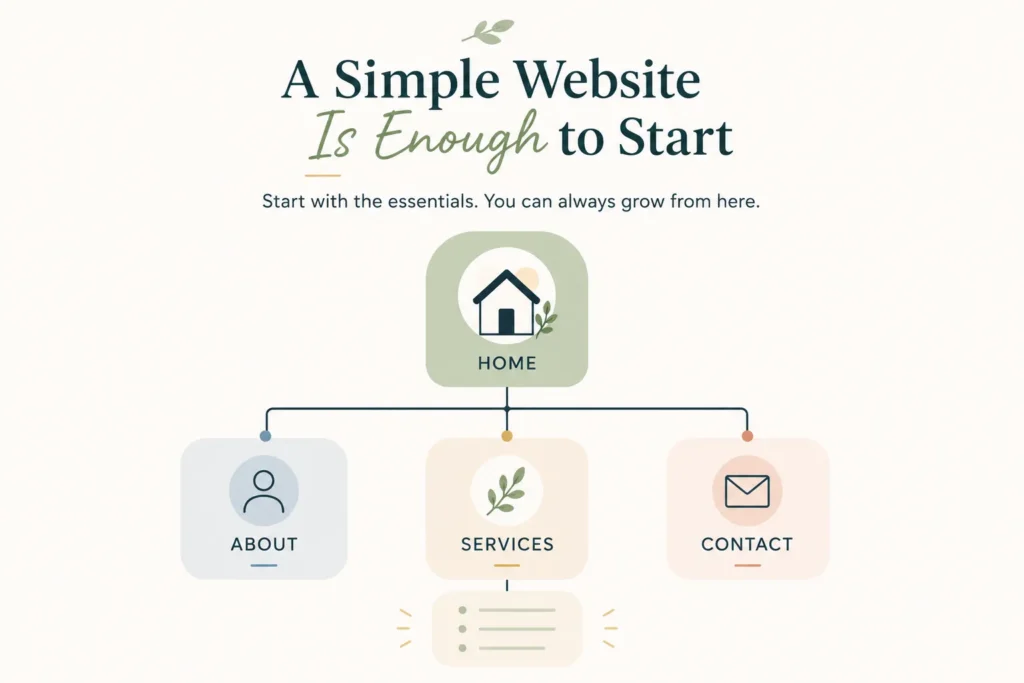
One of the biggest misconceptions about therapy websites is that they need to be massive.
Most new private practice websites actually need a fairly simple structure.
A strong starter website often includes:
- Home Page
- About Page
- Services Pages
- Contact Page
- Optional FAQ or Fees Page
Home Page
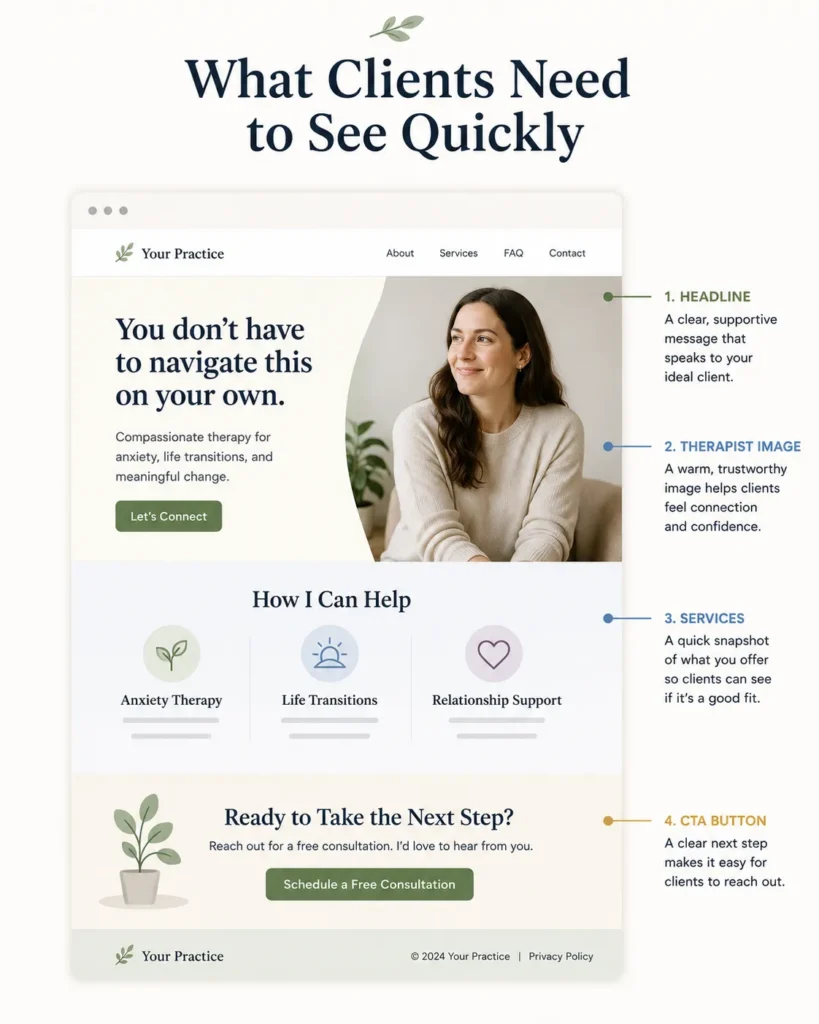
Your homepage helps visitors quickly understand:
- who you help
- what you help with
- what services you offer
- how to take the next step
The homepage should feel:
- clear
- calming
- easy to navigate
- emotionally grounded
About Page
Your About page helps visitors get a sense of who you are.
It does not need to sound overly formal or clinically impressive.
Potential clients are usually trying to understand:
- whether they feel safe with you
- whether you seem approachable
- whether your personality and approach feel aligned with their needs
Services Pages
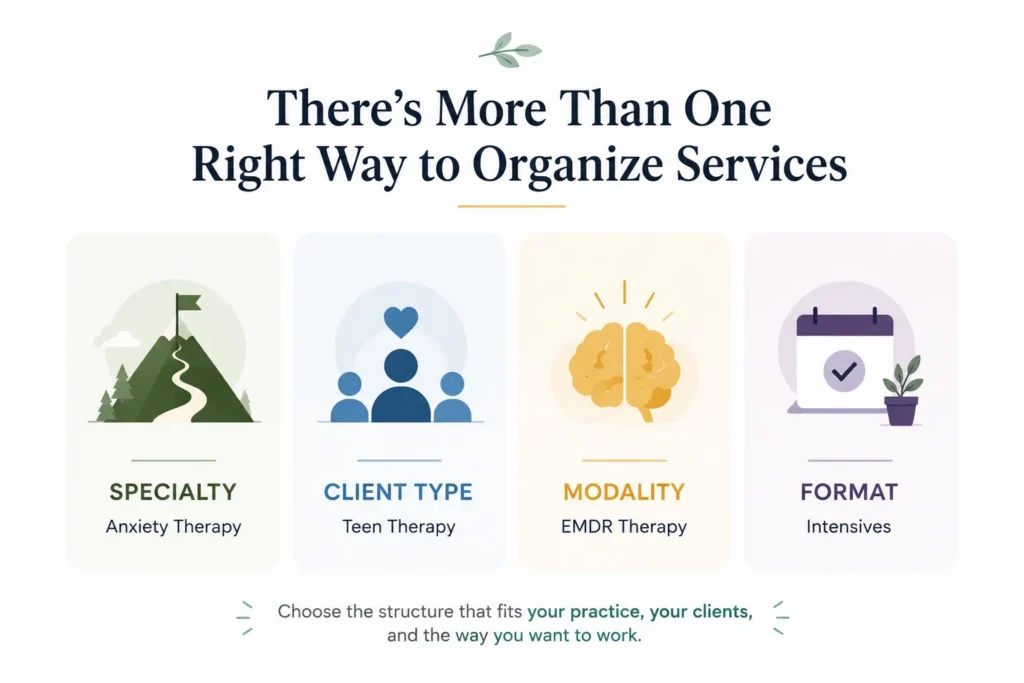
Many therapists benefit from creating separate pages for different services, specialties, or client groups.
For example:
- Individual Therapy
- Couples Counseling
- EMDR Therapy
- Trauma Therapy
- Teen Therapy
- Anxiety Counseling
These pages help:
- clarify your services
- improve SEO
- help potential clients navigate more easily
- create more focused messaging
Organize Services in a Way That Makes Sense to Clients
Therapists often think about their work clinically.
Clients usually search based on:
- symptoms
- life experiences
- relationship struggles
- age groups
- goals
Your website structure should prioritize clarity for potential clients, not just clinical categorization.
Step 7: Write Copy That Feels Human
Many therapists overthink website copy.
They worry about:
- sounding professional enough
- saying the right thing
- getting every word perfect
- explaining their approach correctly
But in reality, therapy website copy usually works best when it feels:
- conversational
- grounded
- emotionally attuned
- clear
- approachable
Potential clients are often reading your website while:
- anxious
- discouraged
- overwhelmed
- uncertain
- emotionally exhausted
Your copy does not need to sound impressive.
It needs to help the right person feel understood.
Avoid Overly Clinical Language
Therapists sometimes accidentally write copy that sounds more appropriate for colleagues than potential clients.
For example, clients are usually not searching for:
- theoretical orientations
- highly clinical terminology
- professional jargon
They are usually searching for:
- help with anxiety
- relationship struggles
- burnout
- trauma
- parenting stress
- emotional overwhelm
The clearest websites often feel simpler and more human.
Step 8: Create a Simple Visual Direction
Your website does not need elaborate branding to look professional.
But it does need visual consistency.
Simple is fine.
Random is not.
What You Actually Need
At minimum, most therapists should have:
- a professional headshot
- a simple color palette
- readable fonts
- consistent spacing and layouts
- cohesive imagery
- enough white space
- a calming visual tone
A website can absolutely be simple while still feeling polished and trustworthy.
Your Website Should Feel Cohesive
Potential clients are often making emotional impressions very quickly.
If a website feels:
- cluttered
- inconsistent
- difficult to navigate
- visually chaotic
- outdated
it can unintentionally reduce trust.
You do not need expensive branding to create a cohesive experience.
You simply need intentionality and consistency.
Step 9: Make Sure the Technical Basics Are Right
Even beautiful websites can create problems if the technical basics are missing.
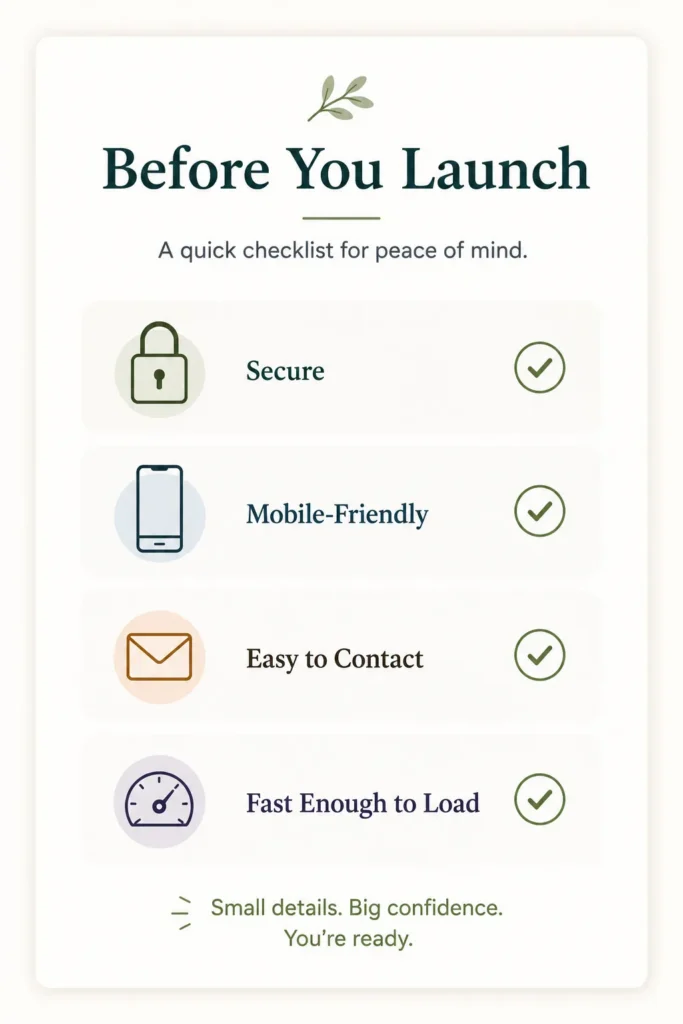
Before launching your website, make sure:
- the site works on mobile devices
- your SSL certificate is active
- contact forms work correctly
- pages load reasonably quickly
- navigation is clear
- text is readable
- links work properly
- contact information is easy to find
Mobile Optimization Matters More Than Many Therapists Realize
A large percentage of therapy clients search for therapists on their phones.
If your site:
- doesn’t display properly on mobile
- loads slowly
- has tiny unreadable text
- feels difficult to navigate
people may leave before ever contacting you.
Security Matters Too
If visitors see browser warnings that your website is “not secure,” it can immediately reduce trust.
This is one reason SSL certificates are important.
Your website should feel:
- safe
- professional
- stable
- functional
Step 10: Add Basic SEO Foundations
You do not need advanced SEO before launching your website.
But you do want basic SEO foundations in place from the beginning.
This makes it much easier for your website to grow over time.
Basic SEO Foundations for Therapists
At minimum, make sure your website includes:
- clear page titles
- service-specific pages
- location references where appropriate
- readable URLs
- meta descriptions
- image alt text
- internal links
- a Google Business Profile
SEO Is Easier When Built Into the Foundation
Many therapists think SEO is something that gets “added later.”
But websites are usually much easier to grow when visibility is considered from the beginning.
That does not mean you need to obsess over SEO before launching.
It simply means creating:
- clear structure
- clear service pages
- clear messaging
- a technically solid foundation
Step 11: Launch, Learn, and Improve Over Time
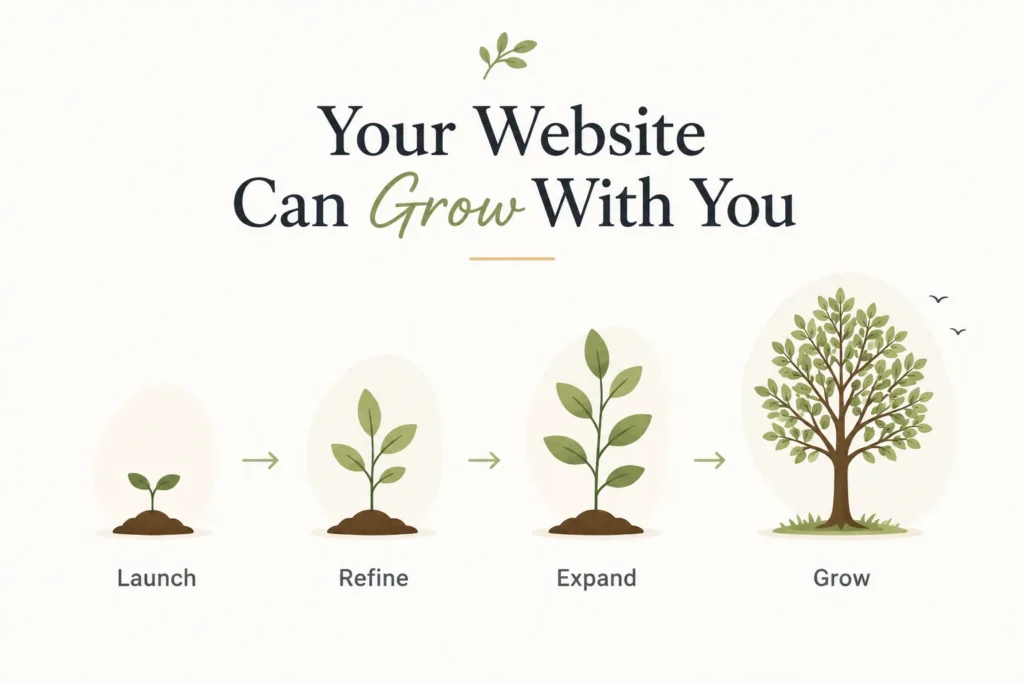
One of the most important things to remember is that your website is not meant to stay frozen forever.
Your practice will evolve.
Your website can evolve with it.
Over time, you may:
- refine your niche
- transition toward private pay
- improve your branding
- redesign your site
- expand your services
- improve your SEO
- create educational content
- grow into a group practice
- add courses, workshops, or resources
That is normal.
Your first website does not need to perfectly represent every future version of your practice.
It simply needs to create a clear, trustworthy starting point.
A good website is not built all at once.
It grows over time.
Common Mistakes Therapists Make When Starting a Website
Waiting Until Everything Feels Perfect
Perfectionism keeps many therapists stuck for far too long.
You do not need every detail figured out before beginning.
Your niche can evolve.
Your branding can evolve.
Your copy can evolve.
Your website can evolve.
A clear, functional website that exists is almost always more helpful than a perfect website that never launches.
Choosing a Platform Only Because It Feels Easy
Beginner-friendly platforms can work well in some situations.
But many therapists choose a platform without thinking about:
- long-term flexibility
- SEO goals
- future growth
- functionality limitations
- scalability
The easiest option at the beginning is not always the best long-term foundation.
Trying to Sound Overly Professional
Many therapists unintentionally write copy that sounds stiff, clinical, or overly formal.
Potential clients are usually looking for:
- clarity
- warmth
- emotional safety
- relatability
- trust
Simple, human language is often far more effective than highly polished clinical terminology.
Creating a Beautiful Website That Feels Unclear
A website can be visually attractive and still fail to help potential clients understand:
- who you help
- what you help with
- what services you offer
- how to contact you
Clarity matters more than visual complexity.
Ignoring Mobile Optimization
Many therapy clients search for therapists on their phones.
If your website is difficult to use on mobile devices, people may leave before ever reaching out.
Forgetting the Technical Basics
Even simple websites should have:
- SSL certificates
- working forms
- readable text
- functioning links
- backups
- clear navigation
A technically broken website can unintentionally damage trust.
Trying to DIY When the Process Is Deeply Draining
DIY can work beautifully for some therapists.
But if the process is consistently:
- stressful
- frustrating
- overwhelming
- time-consuming
- emotionally draining
it may be worth considering additional support.
Your energy matters too.
Frequently Asked Questions
Do I Need a Website Before Starting Private Practice?
In most cases, yes.
Even a simple website helps establish legitimacy and gives potential clients a clear place to learn about you, your services, and how to contact you.
Many therapists begin with a relatively small website and expand it over time.
Can I Start With a Simple Website and Improve It Later?
Absolutely.
Your website is meant to evolve with your practice.
You do not need every future service, specialty, or offering figured out before launching.
Starting with a clear, trustworthy foundation is often the best approach.
Do Therapists Need WordPress?
Not necessarily.
Platforms like Squarespace and Wix can work well for some therapists, especially when simplicity is the highest priority.
However, WordPress is often a stronger long-term foundation for therapists who care about:
- SEO
- flexibility
- scalability
- customization
- future growth
Is Squarespace Good for Therapists?
Squarespace can work well for relatively simple websites.
Many therapists appreciate that it feels approachable and easier to use initially.
The tradeoff is that it may become more limiting as your practice grows and your website needs become more complex.
How Many Pages Does a New Therapy Website Need?
Most therapy websites can start relatively small.
A strong beginner website often includes:
- a homepage
- an about page
- one or more service pages
- a contact page
- optionally a FAQ or fees page
You do not need dozens of pages to launch professionally.
Should I Write My Own Website Copy?
You can.
Some therapists enjoy writing and are able to create warm, clear, client-centered copy on their own.
Others benefit from support translating their clinical expertise into language that feels approachable and emotionally resonant for potential clients.
What Is the Most Important Part of a Therapy Website?
Clarity and trust.
Potential clients should quickly understand:
- who you help
- what you help with
- what working with you might feel like
- how to take the next step
A website does not need to be flashy to be effective.
How Long Does It Take to Build a Therapy Website?
That depends on:
- the platform
- the complexity of the site
- whether you are DIYing or hiring support
- how quickly copy and content come together
Simple websites can often be created relatively quickly.
More customized websites usually require more planning and collaboration.
Next Steps
If you are just beginning, focus on building a clear and trustworthy foundation.
You do not need to have your entire practice perfectly figured out before you begin.
Your next steps are usually:
- Choose your domain name
- Decide on a platform
- Choose hosting
- Outline your core pages
- Decide whether DIY or professional support makes the most sense for you
- Launch a strong foundational version of your website
- Continue refining over time
Related ROOTS Guides
- What Is Website Hosting? A Beginner’s Guide for Therapists
- Squarespace vs WordPress for Therapists
- What Pages Every Therapist Website Needs
- How Much Does a Therapist Website Cost in 2026?
- Local SEO for Therapists Explained
Feeling Overwhelmed by All the Pieces?
You do not have to figure everything out alone.
Strong Roots Web Design offers therapist-focused website support designed to help private practice owners create clear, professional websites that can grow alongside their practices.
Whether you want a fully custom website or a more streamlined semi-custom option, the goal is the same:
Helping therapists build websites that feel trustworthy, grounded, and sustainable.
Learn About Semi-Custom Websites
Final Thought
Starting a therapy website can feel intimidating at first.
But most therapists do not need to become website experts overnight.
They simply need a website that:
- feels trustworthy
- works well
- communicates clearly
- supports the growth of their practice
Your website does not need to begin perfectly.
It simply needs a strong enough foundation to begin.
From there, it can continue growing alongside you and your work.