
If you’ve started researching websites for your private practice, you’ve probably come across the term website hosting.
And if you’re like many therapists, your reaction may have been something along the lines of:
“I know I probably need it, but I have no idea what it actually is.”
You’re not alone.
Website hosting is one of those topics that often sounds far more complicated than it really is. Many therapists understand that they need a website and a domain name, but they’re not quite sure where hosting fits into the picture.
The good news is that you don’t need to become a website expert to make good decisions about hosting.
You don’t need to understand server architecture.
You don’t need to memorize technical specifications.
And you definitely don’t need to spend your evenings reading hosting forums.
You simply need to understand what hosting does, why it matters, and what to look for when choosing a hosting provider.
This guide will walk you through the basics in plain English so you can make informed decisions without feeling overwhelmed.
What Is Website Hosting?
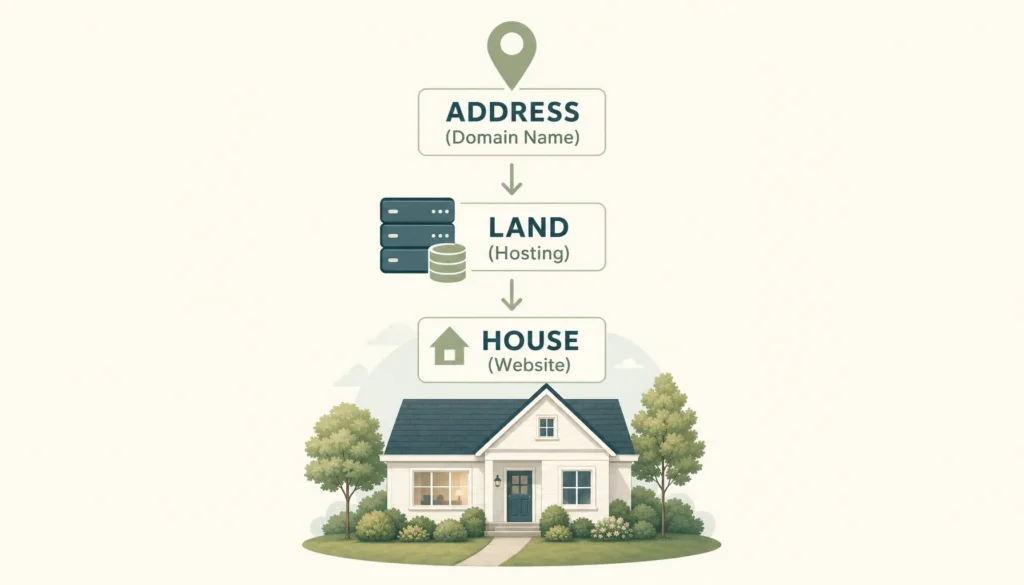
The easiest way to understand hosting is to think of your website like a house.
Your website actually has three separate pieces:
Your Domain Name
Your domain name is your address.
It’s how people find you online.
Examples:
- yourpractice.com
- drjanesmiththerapy.com
- chicagoanxietytherapy.com
Just like a street address helps people find a physical location, your domain name helps people find your website.
Your Hosting
Hosting is the land where your house sits.
It’s the space you rent on a server where all of your website’s files, images, pages, and content are stored.
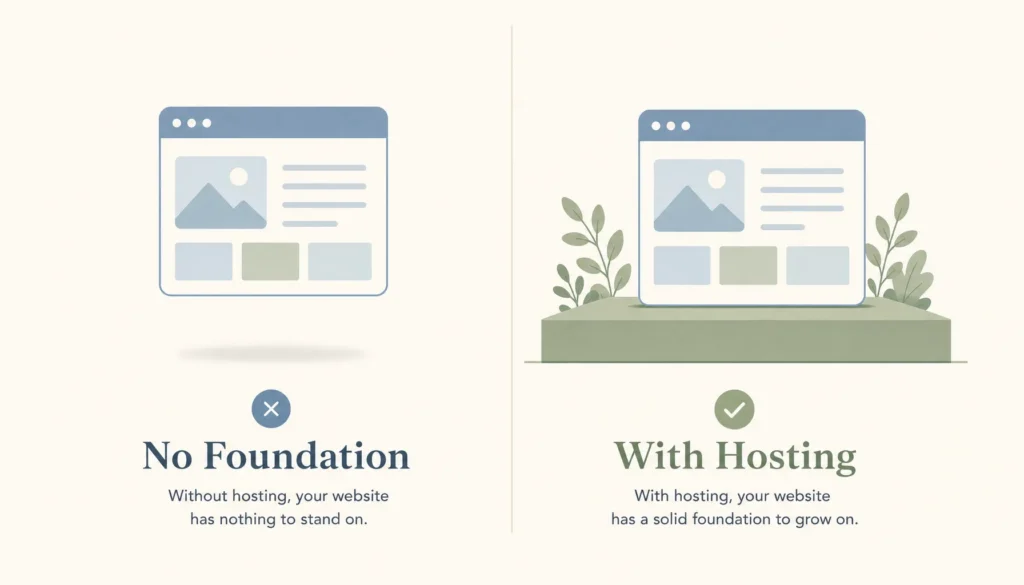
Without hosting, your website has nowhere to live.
Your Website
Your website is the house itself.
It’s the design, pages, copy, images, contact forms, and content that visitors interact with when they arrive.
Together:
Domain Name + Hosting + Website = Your Online Presence
Many therapists think of “a website” as one thing, but in reality it’s several pieces working together.
Why Therapists Need Hosting
At this point, you might be wondering:
“If hosting is just where my website lives, why should I care about it?”
Because hosting directly impacts whether your website is:
- available
- secure
- reliable
- trustworthy
- functioning properly
Without hosting:
- your pages can’t load
- your contact forms can’t work
- visitors can’t access your website
- search engines can’t find your content
In other words:
Hosting is what allows your website to exist online in the first place.
It’s not the most exciting part of having a website, but it’s one of the most important.
What Therapists Actually Need From Hosting
One of the biggest mistakes therapists make is assuming they need to understand all of the technical details of hosting.
In reality, most therapists don’t need to care about:
- server specifications
- bandwidth calculations
- infrastructure architecture
- advanced hosting features
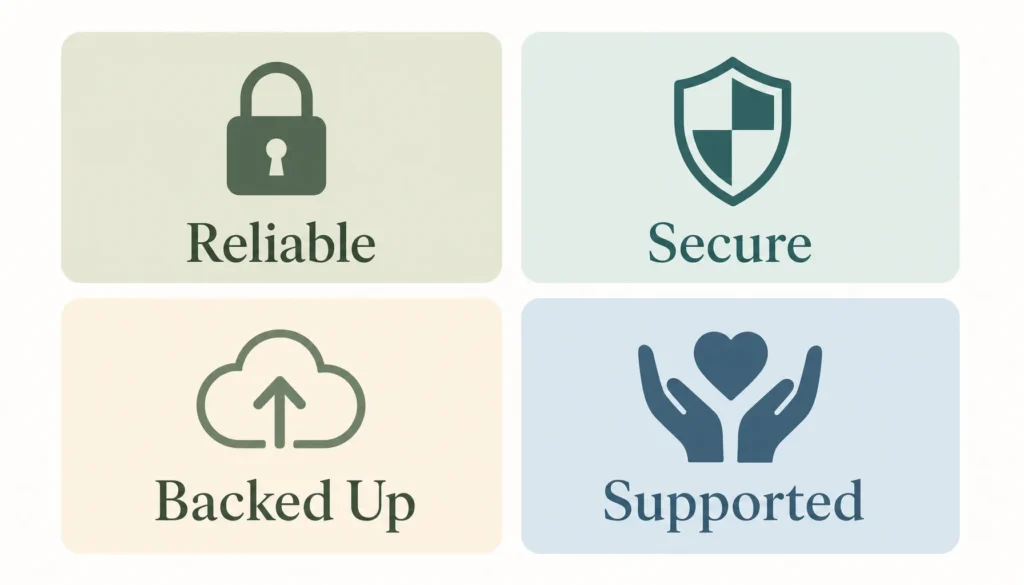
Instead, there are four things that matter most.
Reliability
When someone searches for a therapist and finds your website, your website should be available.
It sounds obvious, but reliability is one of the most important things you’re paying for when you purchase hosting.
If your website is frequently unavailable, loads inconsistently, or experiences regular downtime, potential clients may never return.
Many people searching for therapy are already feeling vulnerable, discouraged, overwhelmed, or uncertain.
If they encounter a broken website, they may simply move on to the next therapist.
Good hosting helps ensure your website is available when people need it.
Security
Therapy is a trust-based profession.
People are often deciding whether to contact you based on a relatively brief interaction with your website.
Your website should feel:
- professional
- safe
- trustworthy
- well maintained
While hosting alone doesn’t guarantee security, quality hosting plays a major role in helping keep your website protected.
Good hosting providers often include security features that help reduce risks and keep your website functioning properly.
Backups
Imagine spending months building your website.
You’ve written all of your copy.
You’ve uploaded your photos.
You’ve carefully created your service pages.
And then something breaks.
Without backups, recovering that work can be difficult.
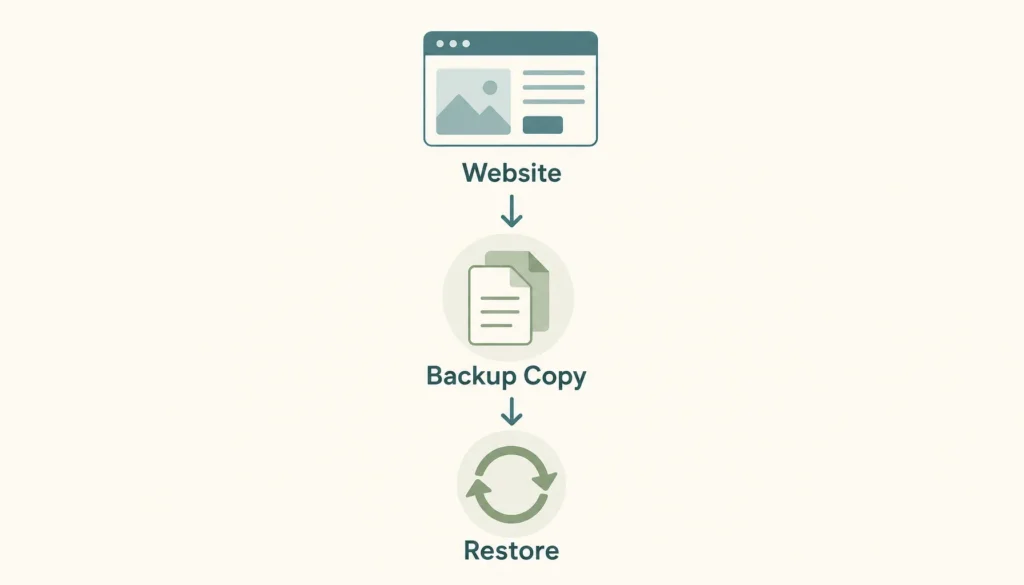
With backups, you have a safety net.
Good hosting providers typically create automatic backups of your website so it can be restored if something goes wrong.
For many therapists, this is one of the most valuable features hosting can provide.
Support
This is one area that many therapists underestimate.
When everything is working properly, support doesn’t seem very important.
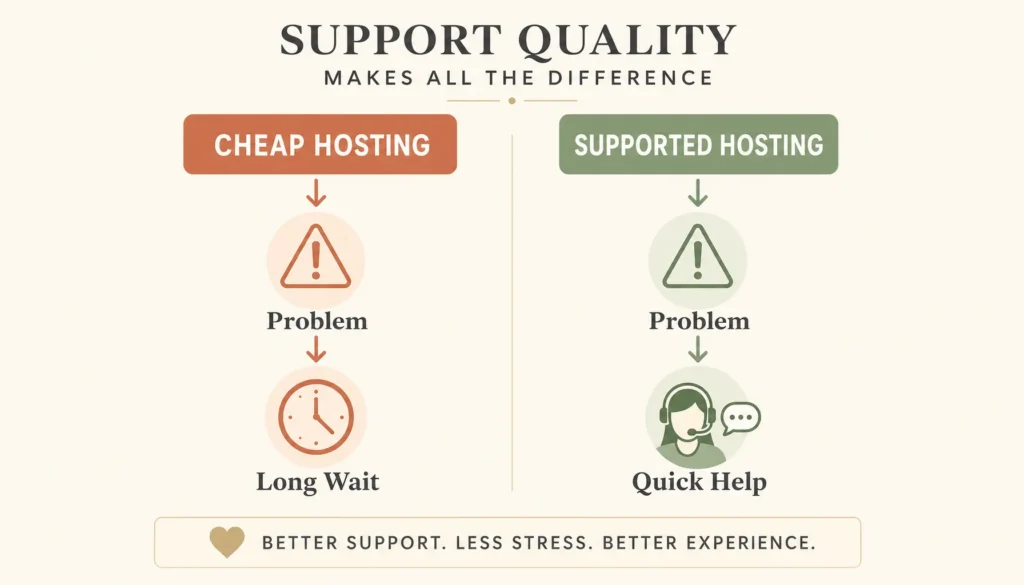
But when something breaks, support suddenly becomes one of the most important parts of your hosting experience.
If your contact form stops working…
If your website goes down…
If you accidentally break something…
You want to be able to reach someone who can help.
Fast.
Accessible support often ends up being far more valuable than a long list of technical features you’ll never use.
What Is an SSL Certificate?
One hosting-related term you’ll hear frequently is SSL certificate.
This sounds technical, but the concept is simple.
An SSL certificate helps secure information exchanged between your website and visitors.
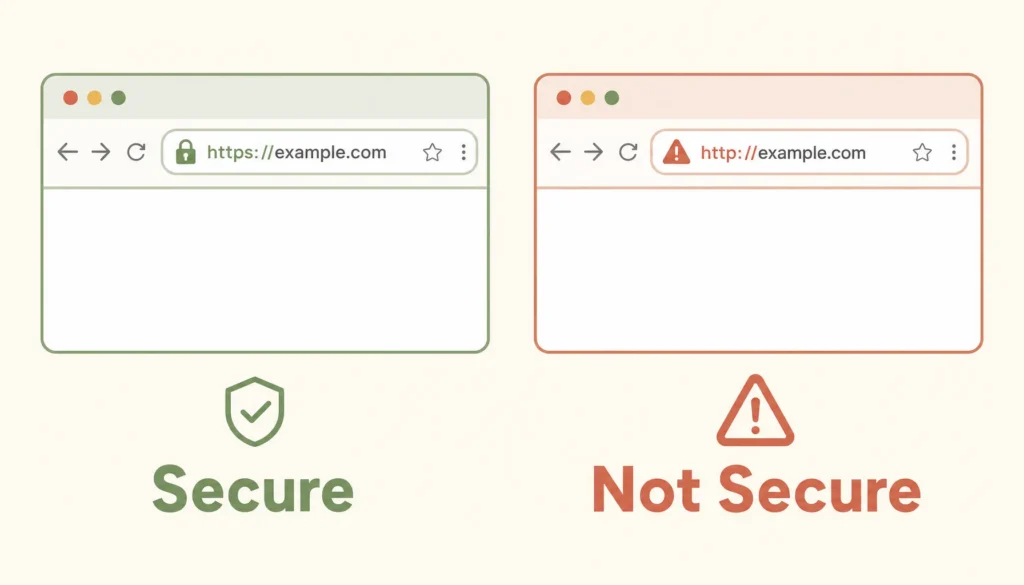
The easiest way to recognize an SSL certificate is by looking for the small lock icon next to a website address in your browser.
When a website doesn’t have SSL configured properly, visitors may see warnings that the site isn’t secure.
For therapists, that’s not ideal.
Even if your website isn’t collecting highly sensitive information directly, browser security warnings can create uncertainty and reduce trust.
Most quality hosting providers include SSL certificates automatically.
This is one of the reasons it’s worth choosing hosting that prioritizes reliability and security.
Common Hosting Mistakes Therapists Make
Most hosting mistakes don’t happen because therapists make bad decisions.
They happen because hosting is unfamiliar territory.
When you’re trying to launch a private practice, there are already a hundred things competing for your attention. Hosting often becomes one more technical decision that feels difficult to evaluate.
Here are some of the most common mistakes we see.
Choosing Based Only on Price
It’s tempting to choose the cheapest hosting option available.
After all, if hosting is just where your website lives, why pay more?
The problem is that the cheapest hosting plans often come with tradeoffs.
You may encounter:
- slower performance
- limited support
- fewer security features
- fewer backups
- more downtime
- confusing renewal pricing
That doesn’t mean you need expensive enterprise-level hosting.
But it does mean that choosing based solely on price can create frustration later.
A website is an investment in your practice. Once you’ve spent time creating it, you want it to be reliable and supported.
Choosing the Biggest Name You Recognize
Many therapists end up using whatever hosting company they’ve seen advertised most often.
Large hosting companies spend millions of dollars on marketing.
That doesn’t necessarily mean they’re the best fit for therapists.
In some cases, smaller hosting providers offer:
- better support
- better performance
- more specialized service
- faster response times
The best hosting provider isn’t always the one with the biggest advertising budget.
Assuming All Hosting Is Basically the Same
At first glance, many hosting plans look similar.
They all promise things like:
- fast websites
- great support
- security
- reliability
But the actual experience can vary significantly.
One hosting provider may respond to support requests in minutes.
Another may leave you waiting for hours.
One may include automatic backups.
Another may charge extra.
One may proactively help solve problems.
Another may simply point you toward documentation.
The details matter.
Ignoring Support Until Something Breaks
Support is one of those things that’s easy to overlook when everything is working.
But when something goes wrong, support suddenly becomes incredibly important.
Imagine:
- your website goes down
- your contact form stops working
- an update causes a problem
- visitors can’t access your site
When that happens, knowing that help is available can dramatically reduce stress.
Support isn’t just a feature.
For many therapists, it’s peace of mind.
How to Choose Hosting Without Getting Overwhelmed
The hosting industry loves technical specifications.
Therapists usually don’t.
Fortunately, you don’t need to compare dozens of technical features to make a good decision.
Instead, focus on a few simple questions.
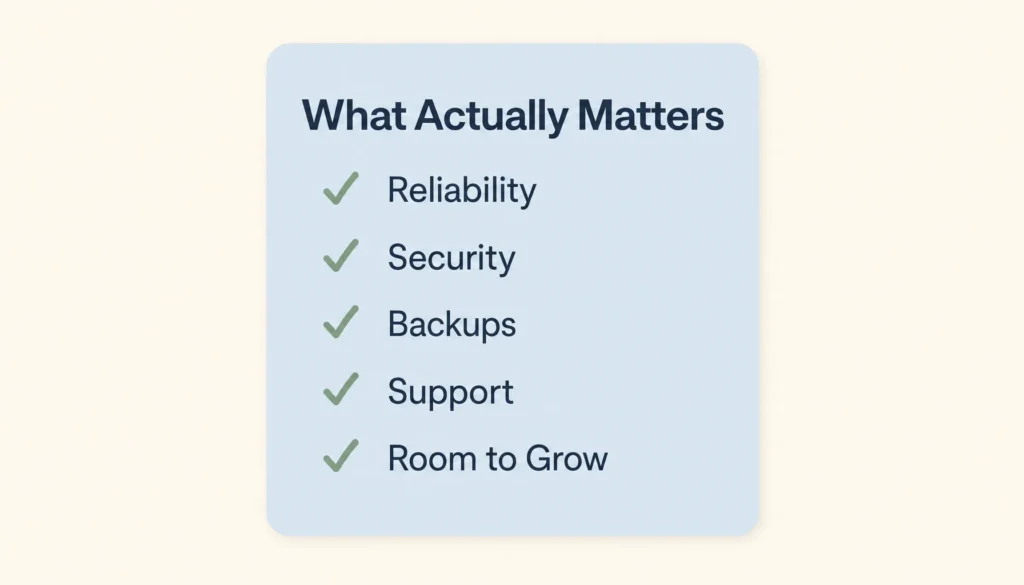
Is It Reliable?
Can you trust your website to stay online consistently?
Your website doesn’t need to be perfect.
But it does need to be available when people need it.
Is It Secure?
Does the hosting provider include basic security features?
Does it include SSL certificates?
Does it take security seriously?
Trust matters online just as much as it does in person.
Does It Include Backups?
If something breaks, can your website be restored?
Backups are one of the simplest ways to reduce risk.
Can You Get Help When You Need It?
How accessible is support?
How quickly do they respond?
How easy is it to reach a real human being?
This is often one of the most important questions therapists can ask.
Will It Grow With Your Practice?
The hosting that works for your practice today should ideally continue supporting you as your practice grows.
You don’t necessarily need the most advanced hosting available.
But it’s helpful to choose a provider that won’t become a limitation as your website evolves.
Do Therapists Need Expensive Hosting?
Usually not.
Most therapists do not need:
- enterprise infrastructure
- advanced server configurations
- highly customized hosting environments
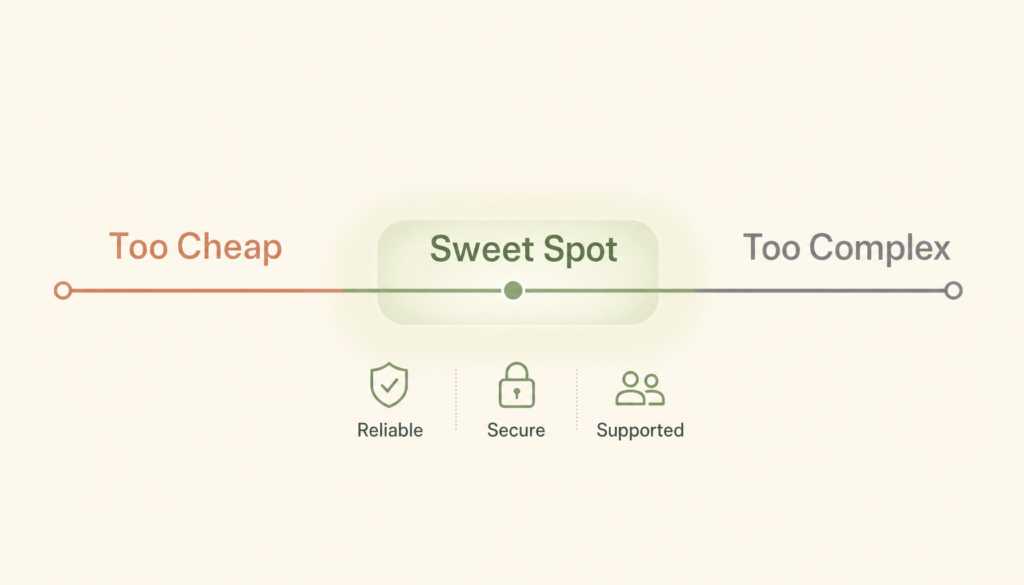
But that doesn’t mean the cheapest option is always the best choice.
The goal is to find the sweet spot.
Hosting should be:
- reliable
- secure
- supported
- reasonably fast
- easy to manage
Think of hosting the same way you might think about office furniture.
You don’t necessarily need the most expensive option available.
But you probably don’t want the cheapest option either if it’s going to create problems every day.
The goal is dependable.
Frequently Asked Questions
Is Hosting the Same Thing as a Domain Name?
No.
Your domain name is your website’s address.
Hosting is the place where your website actually lives.
You need both.
Can I Have a Website Without Hosting?
No.
Every website needs to be hosted somewhere in order to be accessible online.
Even website builders like Squarespace and Wix include hosting behind the scenes.
What Happens If My Hosting Expires?
If hosting expires and isn’t renewed, your website may become unavailable.
That’s one reason it’s important to keep billing information updated and understand renewal policies.
How Much Should Therapists Expect to Pay for Hosting?
Prices vary widely.
Most therapists don’t need the cheapest hosting available, nor do they need expensive enterprise solutions.
Instead, focus on finding hosting that offers a good balance of:
- reliability
- support
- security
- backups
- ease of use
Can I Switch Hosting Providers Later?
Yes.
Most websites can be moved from one hosting provider to another.
While migrations sometimes require a bit of work, you’re not permanently locked into your first hosting choice.
Is WordPress Hosting Different From Regular Hosting?
Sometimes.
Many providers offer hosting built specifically for WordPress websites.
These plans often include WordPress-focused tools, support, and performance optimizations.
Next Steps
The most important thing to remember is that hosting doesn’t need to be complicated.
You don’t need to become a hosting expert.
You simply need hosting that helps your website remain:
- available
- secure
- supported
- reliable
Once those fundamentals are in place, you can focus your energy where it belongs: serving your clients and growing your practice.
If you’re still building your website foundation, these resources may help:
- How to Start a Therapy Website
- Squarespace vs WordPress for Therapists
- What Pages Every Therapist Website Needs
- DIY vs Hiring a Therapist Website Designer
Feeling Overwhelmed by All the Moving Pieces?
Building a therapy website involves more than choosing hosting.
If you’re trying to figure out domains, hosting, website platforms, copy, design, and SEO all at once, it’s easy to feel stuck.
Strong Roots Web Design helps therapists create professional websites with a solid foundation, so you can spend less time worrying about technology and more time focusing on your practice. We also offer therapist-friendly hosting built to take the guesswork out of this exact decision.