
If you’ve been looking for help getting your therapy practice found on Google, you’ve probably discovered that just about everyone seems to offer SEO. Web designers, marketing agencies, freelancers, companies that work only with therapists… it can be hard to tell what the difference is, let alone which one you need.
Part of the confusion is that SEO isn’t just one thing. It can mean making sure your website is working properly, helping people find you in local searches, improving your Google Business Profile, or writing pages that answer the questions potential clients are actually asking. Different providers focus on different pieces.
So rather than looking for the biggest promises, I’d start by looking for someone whose approach makes sense for your practice and who can explain what they’re doing without making your head spin.
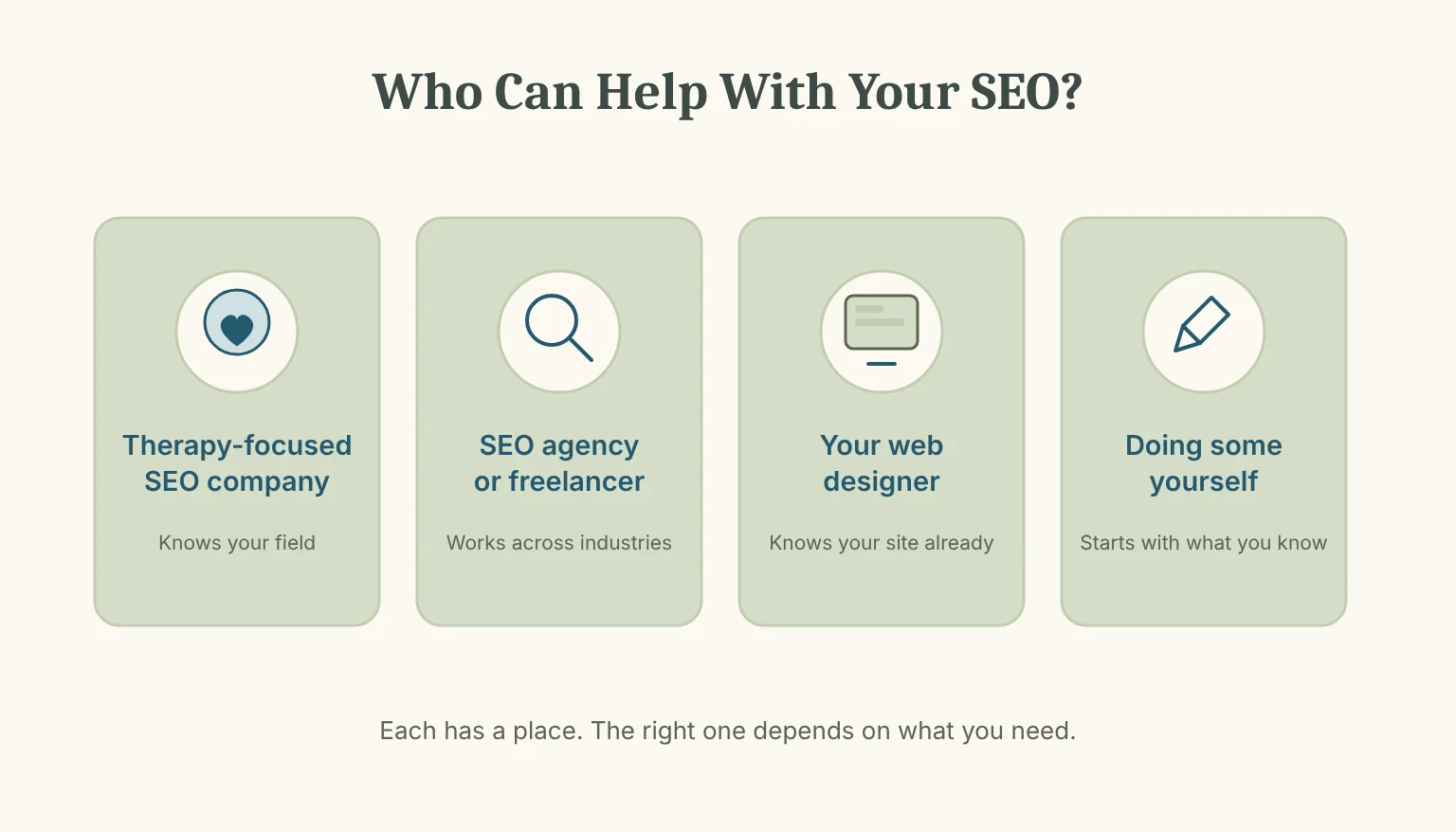
An SEO company that specializes in therapists
Working with a company that knows the mental health field can be a real advantage. They may already understand the language of therapy, the differences between specialties, and why marketing a counseling practice isn’t quite the same as marketing a roofing company.
The thing I’d want to know is how personal the work will be. Will someone take the time to learn about your practice and your ideal clients? Or will your website get the same handful of changes as everyone else’s? Ask what they actually do each month, not just what’s included in the package name.
A general SEO agency or freelancer
There are some wonderful SEO professionals who work across many industries. A good one can absolutely help a therapy practice. You’ll just want to know whether they’re comfortable learning the nuances of mental health marketing, particularly around sensitive topics, client privacy, and how people look for care.
If you already have a good website and need help with a particular technical problem or local search issue, a specialist outside the therapy world might be exactly the right person.
Your web designer
Some web designers also do ongoing SEO, which can be convenient because the people working on your search visibility already know your website. But it’s worth asking what they mean when they say SEO is included.
Setting up page titles and making sure Google can read a website is useful. It’s not the same as researching the services people are looking for, creating thoughtful content, and continuing to improve your visibility over time. Both matter, but they’re different kinds of work.
Doing some of it yourself
You can absolutely make meaningful improvements on your own. Keeping your Google Business Profile accurate, explaining your specialties clearly, and making sure each important service has a useful page are all good places to begin. Our SEO guide for therapists walks through the basics.
The tricky part is often finding the time. You might know exactly what you want to say about your work with anxious teens, for example, but still have that service page sitting half-written for six months. If that sounds familiar, the right help may be someone who can turn what you know into clear, useful website content.
Where Strong Roots fits in
At Strong Roots, we work specifically with therapists and other mental health professionals, and we also design their websites. That means we can look at how the pieces fit together: what people are searching for, what they find when they land on your site, and whether the pages actually help them understand your services. You can see how our SEO service works.
We’re a small team, and that’s intentional. You work with me and a small team of people who get to know your practice, remember the projects you’ve been planning, and genuinely care about how things are going. If you’re away at a conference or preparing to launch a new service, we know the context. You’re not starting over with someone new every time you have a question.
And I don’t believe everybody needs a big monthly SEO package. Sometimes the most useful next step is fixing a confusing service page, getting your local listings in order, or making your existing website clearer. If I don’t think ongoing SEO is the right investment for you yet, I’ll tell you.
Five questions I’d ask before hiring anyone for SEO
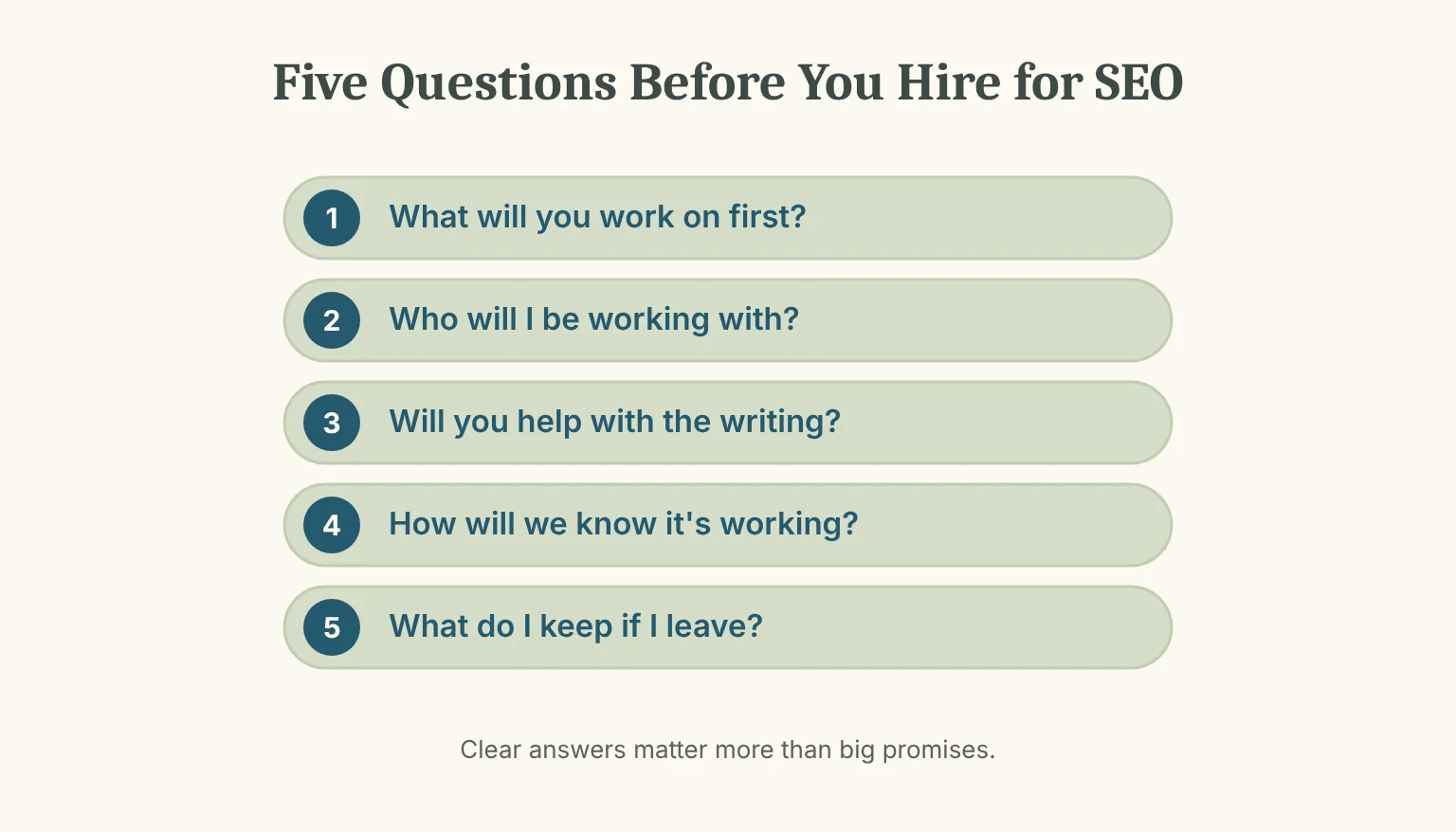
- What would you actually work on in the first few months? Look for specific work, not just a promise to “improve your SEO.”
- Who will I be working with, and how will we communicate? You should know who to contact and how often you’ll hear from them.
- Will you help with the writing? It’s worth finding out whether you’ll be expected to produce all the content yourself.
- How will we know whether it’s helping? Rankings are one piece of the picture, but useful reports should also help you understand search visibility, website visits, and inquiries when those can be tracked.
- Will I keep access to my website, Google Business Profile, and content? You should know what you own and what happens if you decide to stop.
One last thing: I’d be cautious about anyone who guarantees you’ll rank first on Google. No SEO provider can promise that. What they can do is explain their process, show you the work, and be thoughtful about what progress should look like for your particular practice.
If you’re not sure whether you need ongoing SEO, help with a few specific pages, or simply a clearer website, you’re welcome to talk it through with me. We can figure out what would be most useful for your practice right now.